.png)
10 Instagram Ads Best Practices for E-commerce & Lead Gen in 2026

Instagram remains a dominant platform for e-commerce and lead generation, but rising ad costs and platform saturation mean generic tactics no longer cut it. Success now demands a sophisticated, data-driven approach that moves beyond simple boosting and guesswork. This guide provides a prioritized roundup of the top 10 Instagram ads best practices, focusing on the same systems performance agencies use to generate predictable ROI for their clients. We'll break down actionable strategies for creative, targeting, funnel construction, and testing that you can implement immediately to improve campaign performance.
Our goal is to help you lower acquisition costs and scale your brand profitably. Whether you're an e-commerce store owner, a local service business, a coach, or a real estate professional, these strategies are designed for direct implementation. We will skip the fluff and dive straight into the frameworks that deliver results, from crafting video-first creative with compelling hooks to structuring advanced retargeting sequences. You'll learn how to build high-converting ad funnels, leverage user-generated content for maximum social proof, and set up a disciplined testing process for continuous improvement.
A continuous focus on how to optimise Facebook Ads, including your Instagram campaigns, is critical for sustained success. The principles we'll cover are foundational to building a resilient and scalable advertising system. This article isn't about quick hacks; it’s a comprehensive playbook for building a robust advertising machine that fuels consistent growth. Let's get started.
1. Video-First Creative Strategy with Vertical Hooks
In a mobile-first environment like Instagram, static images often fail to capture attention amidst a sea of dynamic content. A video-first creative strategy is one of the most crucial Instagram ads best practices because it aligns directly with user behavior. This approach prioritizes vertical video (9:16 aspect ratio for Reels and Stories, 4:5 for feed) designed to stop the scroll within the first three seconds.
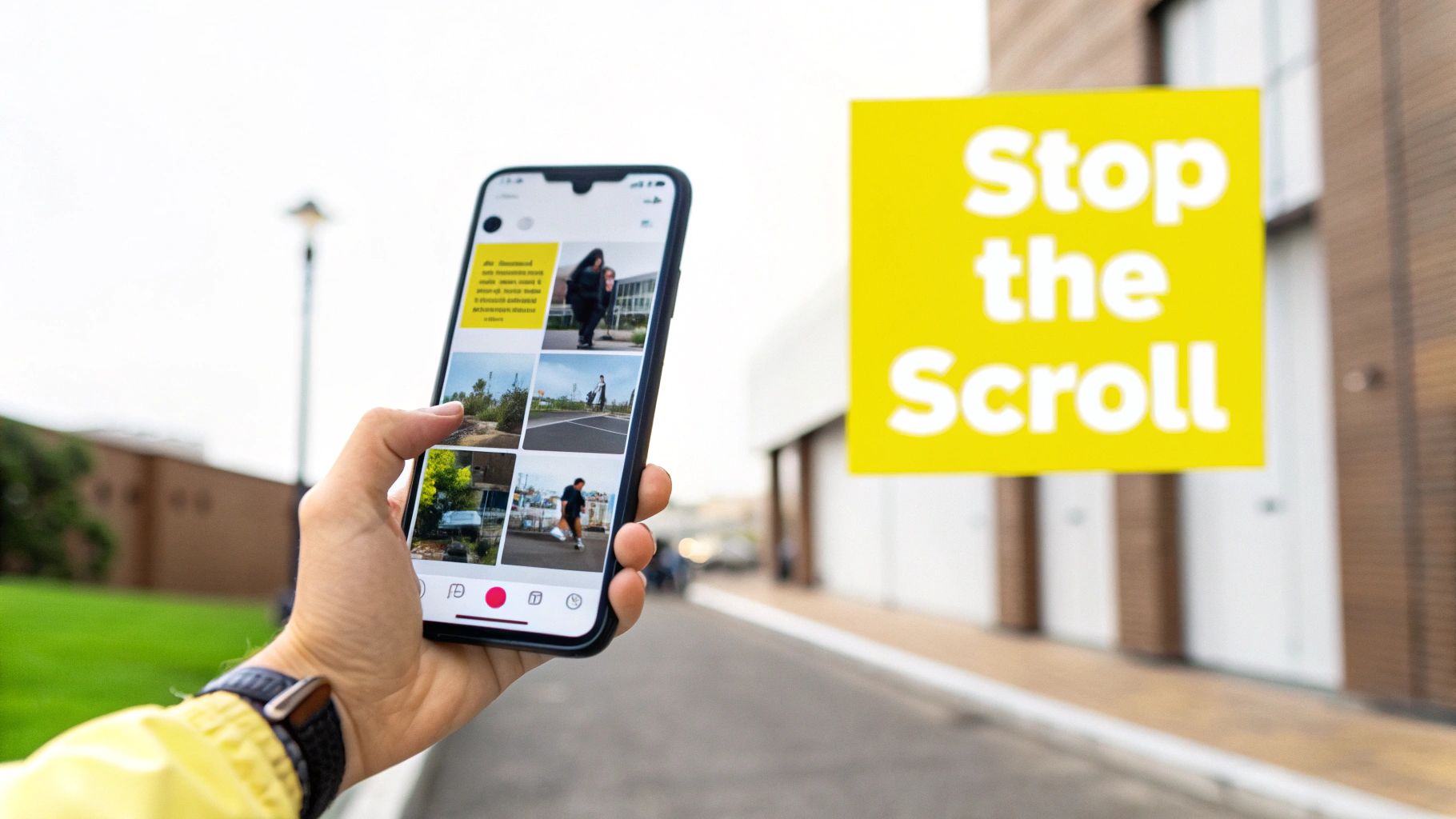
The key is the "hook," an opening that uses a pattern interrupt, a bold statement, or a compelling visual to grab the viewer immediately. Without a strong hook, your ad becomes invisible. The goal is to make a user pause and engage before their thumb reflexively swipes away.
How to Implement a Hook-Driven Video Strategy
Effective hooks are tailored to your audience and offer. An e-commerce brand selling a skincare product might open with a dramatic before-and-after transformation. A real estate agent could start with a sweeping drone shot of a stunning property, immediately followed by text overlay like "This Miami view could be yours."
Here are some actionable examples for different industries:
Coaches & Consultants: Open your video with a surprising statistic or a polarizing statement relevant to your niche. Example: "90% of online businesses fail for this one reason..."
Local Service Businesses: Show a quick, satisfying demonstration of your service. A med spa could show a brief, sped-up clip of a popular treatment, while a home service provider might show a dirty-to-clean power washing shot.
E-commerce Brands: Feature your product solving a problem within the first three seconds. Don't waste time on branding or slow introductions.
Quick-Fire Tips for High-Performing Video Ads
To get the most out of your video creative, follow these guidelines:
Test Multiple Hooks: Create 5-10 different 3-second hooks for the same core video to identify which one captures the most attention and drives the lowest cost per result.
Design for Sound-Off Viewing: An estimated 85% of users watch videos without sound. Use bold text overlays, captions, and strong visuals to convey your message.
Optimize Video Length: Keep in-feed videos under 15 seconds and Stories/Reels ads under 60 seconds. Get to the point quickly.
Show, Don't Just Tell: Let the product or service be the star. The sooner you feature what you're selling, the faster you qualify your audience.
2. Audience Segmentation and Lookalike Targeting
Broad, one-size-fits-all messaging is a recipe for wasted ad spend on Instagram. One of the most impactful Instagram ads best practices is to implement audience segmentation and leverage Lookalike audiences. This strategy involves dividing your audience into specific segments based on their behavior and then using Meta's powerful algorithm to find new people who share characteristics with your best customers.
This precision targeting replaces generic ads with highly relevant messages. By speaking directly to a user's position in the customer journey, from a cold prospect to a loyal repeat buyer, you significantly increase the likelihood of conversion and improve your return on ad spend.
How to Implement Audience Segmentation and Lookalikes
The core idea is to match your message to the audience's temperature. A new visitor needs an introduction to your brand, while a cart abandoner needs a final push to purchase. Start by creating custom audiences from your website traffic, customer lists, and Instagram engagement. Then, use these custom audiences to build high-value Lookalikes.
Here are some actionable examples for different industries:
E-commerce Brands: Target users who abandoned their cart in the last 7 days with a dynamic ad showing the exact product they left behind, coupled with an urgency-based offer like "Limited stock remaining!"
Med Spas: Create a Lookalike audience from a list of your highest-spending clients and target them with ads showcasing impressive before-and-after results for premium treatments.
Coaches & Consultants: Segment past webinar attendees who didn't purchase your course. Target them with testimonial videos and a special enrollment offer to overcome their final objections.
Quick-Fire Tips for High-Performing Audiences
To get the most out of your audience strategy, follow these guidelines:
Start with 1% Lookalikes: Begin with a 1% Lookalike audience for the highest similarity to your source audience. You can test expanding to 3%, 5%, and 10% as you scale your budget.
Use Exclusions Wisely: Exclude existing customers from your top-of-funnel acquisition campaigns to ensure your budget is spent finding new prospects.
Segment for Clarity: Create separate ad sets for each audience segment (e.g., website visitors, Lookalikes, interest-based). This allows you to track performance independently and allocate budget to the winners.
Refresh Your Source Audiences: Update your customer lists and source data for Lookalike audiences at least monthly to ensure Meta's algorithm is working with the most current information.
3. User-Generated Content (UGC) and Social Proof in Ad Creatives
In an era of skepticism towards polished brand messaging, leveraging user-generated content (UGC) is a powerful Instagram ads best practice. This strategy prioritizes authentic content created by real customers, such as reviews, unboxing videos, and lifestyle photos, over slick, studio-produced ads. This approach builds instant trust and credibility by showing prospects how your product or service fits into a real person's life, which often resonates far more effectively than traditional advertising claims.

The power of UGC lies in its ability to provide social proof. When potential customers see people just like them enjoying a product or achieving results with a service, it overcomes purchase anxiety and validates their decision-making process. For advertisers, this means higher engagement, increased conversion rates, and often lower customer acquisition costs.
How to Implement a UGC-Driven Ad Strategy
Integrating UGC starts with actively collecting and repurposing customer content. Instead of simply showcasing your product, you showcase the customer's experience with it. For example, a jewelry brand can run ads featuring customer-submitted photos of their pieces being worn at weddings or on vacation. A tax service can create a simple graphic overlaying a positive client testimonial about their refund amount.
Here are some actionable examples for different industries:
Med Spas & Wellness Clinics: Feature a carousel ad with before-and-after photos submitted by actual clients, highlighting real, achievable results.
Coaches & Consultants: Create a short video compiling screenshots of positive student DMs, Slack messages, or success stories shared in a private community.
Home Service Businesses: Use a customer's smartphone video testimonial filmed right after a job is completed, speaking to the team's professionalism and the quality of the work.
Quick-Fire Tips for High-Performing UGC Ads
To get the most out of your user-generated content, follow these guidelines:
Always Get Permission: Before using any customer content in an ad, secure explicit written permission and clarify usage rights to avoid legal issues.
Incentivize Submissions: Encourage customers to share content by creating a branded hashtag and offering small rewards like a discount code or a feature on your profile.
Test Against Branded Content: A/B test your best UGC creatives against your top-performing branded ads to measure the lift in performance and validate the strategy.
Repurpose All Forms of Praise: Turn positive emails, product reviews, and comments into simple text-based video ads or graphic testimonials.
4. Dynamic Product Ads and Catalog-Based Retargeting
For businesses with multiple products or services, manually creating ads for each item is inefficient and unscalable. Dynamic Product Ads (DPAs) solve this by automatically showing personalized ads to users based on their specific on-site behavior. This is one of the most powerful Instagram ads best practices for e-commerce and catalog-driven businesses because it connects user intent directly with the most relevant product.
This strategy leverages your product catalog and Meta Pixel data to serve ads featuring items a user has viewed, added to their cart, or purchased. Instead of a generic ad, a user who viewed a specific blue dress on your site will see an ad for that exact dress, drastically increasing relevance and conversion rates.
How to Implement Dynamic Retargeting
The core of this strategy is a well-maintained product catalog synced with Meta. Once your pixel is correctly tracking user actions like , , and , you can create campaigns that pull product information directly from your catalog. This allows you to retarget users with surgical precision.
Here are some actionable examples for different industries:
E-commerce: A jewelry site can retarget a user who abandoned a shopping cart containing a specific engagement ring with an ad featuring that exact ring.
Real Estate: An agent can show ads for the specific property listings a prospect viewed on their website, keeping the listings top-of-mind.
Coaches & Consultants: A course creator can recommend advanced courses to users who have previously purchased an introductory program.
Quick-Fire Tips for High-Performing Dynamic Ads
To maximize the effectiveness of your catalog-based campaigns, follow these guidelines:
Segment Your Audiences: Create separate ad sets for users who viewed content versus those who added to cart. Cart abandoners are higher-intent and may respond to a small discount or free shipping offer.
Use Dynamic Overlays: Customize your ad creative with overlays that show the price, a discount percentage, or your brand logo directly on the product image.
Exclude Recent Purchasers: Set up audience exclusions for anyone who has purchased in the last 7-14 days to avoid ad fatigue and showing them items they just bought.
Test Product Sets: Don't just show previously viewed items. Test cross-selling by creating product sets of complementary items or up-selling by showing higher-value products from the same category.
5. Lead Magnet and Funnel-Driven Ad Strategy
Not every Instagram ad needs to push for an immediate sale. A lead magnet and funnel-driven strategy is a powerful best practice for businesses with longer sales cycles or higher-priced offers. This approach involves offering a valuable free resource (like a guide, webinar, or assessment) in exchange for a user's contact information, prioritizing building an email list over direct conversions.
This method allows you to capture high-intent leads from Instagram and move the conversation to a more controlled channel like email. You can then nurture this relationship over time, building trust and authority before presenting a sales offer. This is particularly effective for coaches, consultants, service providers, and high-ticket e-commerce brands.
How to Implement a Lead Magnet Strategy
The key is to create a resource so valuable that your target audience would willingly pay for it. The ad creative should clearly communicate the benefit of the lead magnet, driving traffic to a dedicated, mobile-optimized landing page designed for one purpose: capturing the lead.
Here are some actionable examples for different industries:
Coaches & Consultants: Run ads for a free live webinar registration that solves a specific pain point. Example: "Join my free training on how to land 3 high-ticket clients in 30 days."
Real Estate Agents: Offer a "Free Property Valuation Guide" or an "Investor's ROI Calculator" to attract qualified sellers and buyers.
Med Spas: Promote a free "Personalized Skin Assessment Quiz" that provides tailored recommendations in exchange for an email, leading to a consultation booking.
E-commerce Brands: Use a product comparison guide or a fit quiz as a lead magnet. An apparel brand could offer a "Find Your Perfect Fit" quiz.
Quick-Fire Tips for High-Performing Lead Funnels
To get the most out of your lead generation ads, follow these guidelines:
Optimize the Landing Page: Ensure your landing page is mobile-first and has a crystal-clear headline. Limit form fields to just name and email to maximize conversion rates.
Automate Your Follow-Up: Have a 5-7 part email nurture sequence ready before launching your ads. The first email should deliver the lead magnet instantly.
Create Segmented Lead Magnets: Don't use a one-size-fits-all approach. Develop different lead magnets tailored to the specific needs of different audience segments.
Track Lead Quality: Don't just track cost per lead. Measure the percentage of leads who open your emails, click links, and ultimately purchase to gauge the true ROI of your campaigns.
6. Carousel and Collection Ads for Product Discovery
While single-image or video ads focus on one core message, Carousel and Collection ad formats excel at showcasing product variety and encouraging in-app exploration. This is a vital Instagram ads best practice for businesses with multiple offerings, as it allows users to browse a curated selection without ever leaving the platform. This reduces friction and gives users a mini-storefront experience directly in their feed.
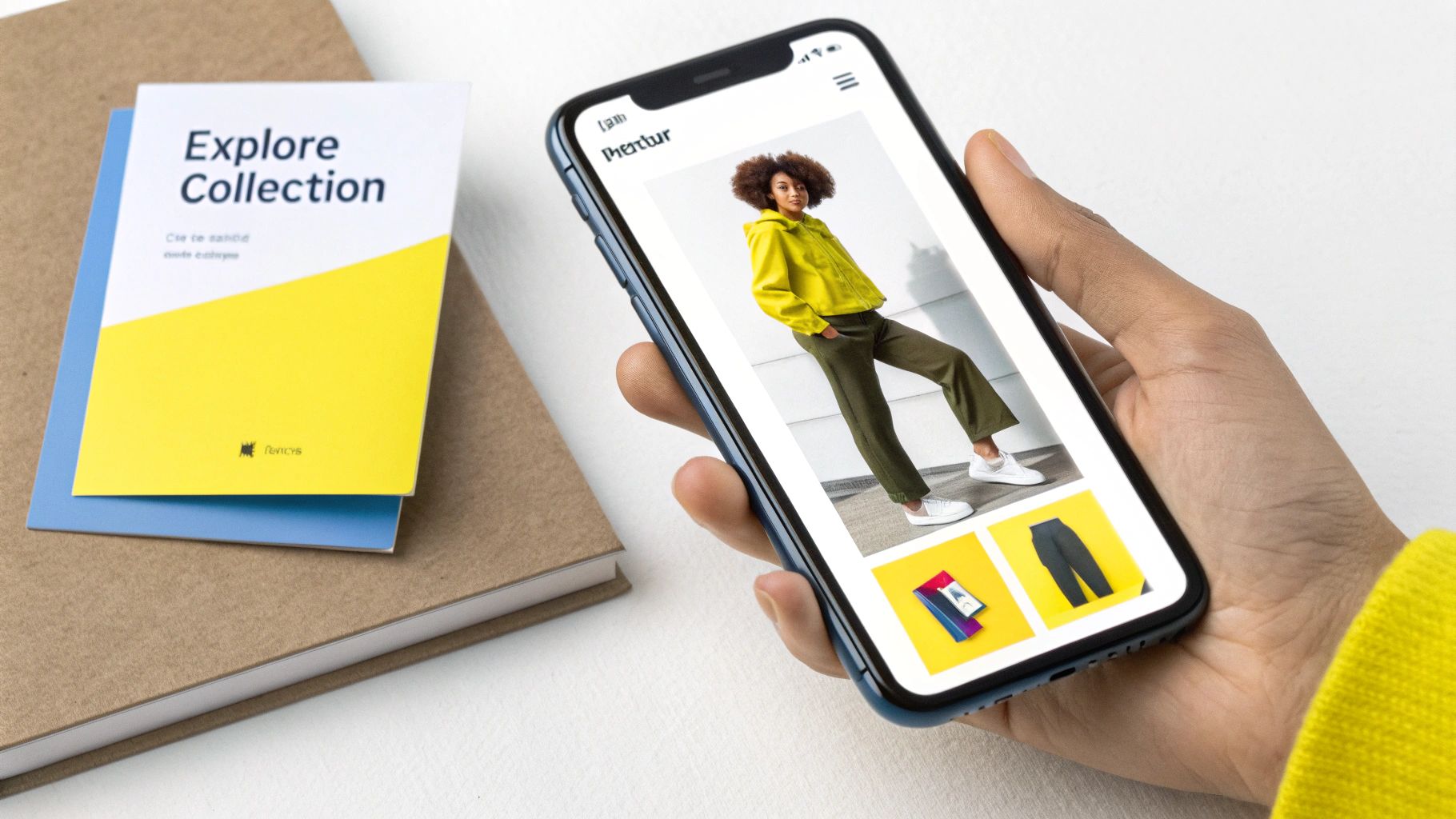
The Carousel format allows you to display up to 10 images or videos in a single ad unit, each with its own headline and link. The Collection ad format takes this a step further, opening up into an immersive, full-screen Instant Experience where users can discover, browse, and learn more about your products.
How to Implement Carousels for Different Industries
The strength of a carousel lies in its ability to tell a story or display a range. Instead of hoping a single product resonates, you can present multiple solutions or styles, increasing the chances of capturing interest.
Here are some actionable examples for different industries:
E-commerce Brands: A jewelry brand can showcase different ring styles, metals, and price points. A fashion retailer could feature multiple outfits styled with one hero product.
Local Service Businesses: A med spa can create cards for different services like facials, laser treatments, and injectables. A home service company can highlight its range of offerings: plumbing, electrical, and HVAC.
Coaches & Consultants: Feature different modules of your signature course or showcase testimonials from various clients on separate cards to build social proof.
Quick-Fire Tips for High-Performing Carousel Ads
To maximize engagement and conversions from your carousel and collection ads, follow these guidelines:
Lead with Your Best Performer: Place your most compelling image or a video hook as the first card to grab attention and encourage users to swipe through the rest.
Maintain Visual Cohesion: Use consistent branding, filters, and design elements across all cards to create a professional and unified look.
Test Card Order Strategically: Experiment with different sequences. Test your best-sellers first, arrange by price point (low-to-high), or showcase your newest arrivals.
Monitor Individual Card Performance: Dive into your ad reports to see which cards get the most clicks and engagement. This data provides valuable insight into which products or services resonate most with your audience.
7. Offer Optimization and Value Ladder Strategy
An irresistible offer is more powerful than any creative or targeting tweak. Instead of just promoting your core product, a value ladder strategy structures your offers in a sequence that guides prospects from a low-risk entry point to your premium services. This is a vital Instagram ads best practice because it reduces initial friction and maximizes customer lifetime value.
The core idea, popularized by marketing experts like Russell Brunson, is to meet customers where they are. You present a low-commitment "front-end" offer (like a free guide or a small product) to acquire a lead, then systematically introduce them to higher-value "back-end" offers once trust is established.
How to Implement a Value Ladder
Building a value ladder means mapping out your customer's journey with a series of ascending offers. The initial ad on Instagram might promote a free lead magnet or a low-ticket item, making the first "yes" from a cold prospect easy to get.
Here are some actionable examples for different industries:
Coaches & Consultants: Free webinar → $47 assessment call → $297 video course → $3,000 group program. Each step solves a bigger problem and requires a greater investment.
Med Spas: Free consultation → $99 introductory facial → $299 treatment package → $999 annual membership. This builds client trust before asking for a major commitment.
E-commerce Brands: Free "How-To" guide → $29 best-selling product → $99 product bundle → $299 recurring subscription box. This turns a single purchase into a long-term customer relationship.
Quick-Fire Tips for High-Performing Offers
To get the most out of your value ladder, follow these guidelines:
Test Offer Pricing: Experiment with 10-20% price variations on your front-end offers to find the sweet spot between conversion rate and profitability before scaling.
Include Risk Reversals: Use strong guarantees (e.g., "30-Day Money-Back Guarantee") on paid offers to reduce purchase anxiety and increase conversions.
Create Urgency: Strategically use limited-time discounts, expiring bonuses, or scarcity (e.g., "Only 10 spots available") to encourage immediate action.
Differentiate Tiers Clearly: Ensure each step in your ladder provides distinct, additional value. Avoid making your offers feel too similar, which can confuse customers.
8. Conversion-Focused Landing Pages with Clear CTA Hierarchy
Your Instagram ad is only half the battle; the click is worthless if the destination doesn't convert. A critical Instagram ads best practice is to direct traffic to a dedicated, conversion-focused landing page. This page is stripped of all distractions (like site navigation or footer links) and is engineered with a single goal and a clear call-to-action (CTA) hierarchy, drastically reducing friction for mobile users.
This approach, popularized by direct response marketers and landing page specialists like Wojo Media, prevents the decision paralysis that occurs when a user lands on a standard website homepage. By aligning the page's message directly with the ad's promise, you create a seamless and persuasive user journey that guides the visitor toward the one action you want them to take.
How to Implement a High-Converting Landing Page
The core principle is singular focus. The headline, copy, visuals, and CTA must all work together to reinforce the value proposition introduced in the ad. A med spa running an ad for a "Botox New Client Special" should lead to a page exclusively about that offer, with a clear "Book Now" button, not their general services page.
Here are some actionable examples for different industries:
E-commerce Brands: Create a product page focused on a single offer. Feature a prominent "Add to Cart" button above the fold, strong product imagery, customer reviews, and a clear guarantee to build trust.
Coaches & Consultants: Design a webinar registration page with a benefit-driven headline (e.g., "Triple Your Leads Without Cold Calls"), speaker photo, testimonials, and a single "Reserve My Spot" CTA.
Real Estate Agents: Use a property valuation page with a simple form and a single CTA like "Get Your Free Home Valuation." Include photos of recently sold homes and client success stories to build credibility.
Quick-Fire Tips for Landing Page Optimization
To maximize conversions from your Instagram ad traffic, follow these guidelines:
Match the Message: Ensure your landing page headline perfectly matches the ad copy. This simple step can reduce bounce rates by 10-20% by confirming the user is in the right place.
Place the CTA Above the Fold: Your primary call-to-action button must be visible on a mobile screen without any scrolling.
Minimize Form Fields: For lead generation, ask only for what is essential, like a name and email. You can gather more information later in the process.
Leverage Social Proof: Include specific testimonials, case studies, or result-driven metrics that address potential customer objections.
Remove All Distractions: Eliminate the main navigation menu, footer links, and any other clickable elements that don't lead to your conversion goal.
Optimize for Speed: Compress images and use a fast web host to ensure your page loads in under three seconds, as mobile users are notoriously impatient.
9. Retargeting and Sequential Messaging Across Ad Sets
Simply showing the same ad to everyone is a recipe for wasted ad spend. One of the most effective Instagram ads best practices is to segment your audience and deliver ads sequentially. This full-funnel strategy guides users from initial awareness to final conversion by tailoring the message to their level of familiarity with your brand.
This approach separates cold audiences (new prospects) from warm audiences (website visitors, video viewers) and hot audiences (cart abandoners). Each segment receives a different message designed to move them to the next stage, creating a cohesive and persuasive customer journey instead of a one-off, disjointed interaction.
How to Implement Sequential Messaging
The core idea is to align your ad creative and offer with the audience's temperature. A cold audience needs education and value, while a hot audience needs a final nudge to overcome purchase anxiety. This prevents you from asking for the sale too early or showing introductory content to people who are already familiar with your brand.
Here are some actionable examples for different industries:
E-commerce Brands: Show a broad, benefit-focused video to a cold audience. Retarget website visitors with a Dynamic Product Ad showcasing items they viewed. Finally, target cart abandoners with an ad offering a small discount or free shipping to close the sale.
Coaches & Consultants: A cold audience sees an ad for a free masterclass. Warm audiences who registered for the masterclass are retargeted with client testimonials and case studies. Hot audiences who attended are shown a direct call-to-action to book a strategy call.
Med Spas: Target a cold audience with a stunning before-and-after compilation. Retarget people who visited specific service pages with videos explaining the benefits of that exact treatment. Finally, show a limited-time booking incentive to those who visited the consultation page but didn't book.
Quick-Fire Tips for High-Performing Retargeting
To get the most out of your sequential campaigns, follow these guidelines:
Create Custom Audiences: Build distinct audiences for website visitors, video viewers (at different completion rates), Instagram engagers, and cart abandoners.
Use Exclusions: Always exclude recent purchasers from your retargeting campaigns to avoid ad fatigue and irrelevant messaging. Also, exclude warm audiences from your cold prospecting campaigns.
Adjust Messaging: Use educational or problem-aware hooks for cold traffic. For warm traffic, focus your creative on overcoming common objections or highlighting unique features.
Set Frequency Caps: Monitor ad frequency closely. If a warm audience sees your ad too many times without converting, it may be time to refresh the creative or adjust the offer.
10. Testing Framework with Structured A/B Testing and Creative Iteration
The most successful advertisers on Instagram don't rely on luck; they rely on data. Implementing a structured A/B testing framework is a critical best practice that replaces guesswork with a scientific process. This approach involves systematically testing one variable at a time, such as creative, copy, or audience, to identify which elements produce the best results and incrementally improve campaign performance.
Without a methodical testing process, you're flying blind, unable to understand why certain ads succeed while others fail. By isolating variables, you can gather clear, actionable data that informs not just your next ad but your entire marketing strategy, leading to a higher and more predictable Return on Ad Spend (ROAS).
How to Implement a Structured Testing Framework
A disciplined testing framework begins with a clear hypothesis. Before launching a test, define what you are testing, what you expect the outcome to be, and why. The goal is to isolate the highest-impact variables first to achieve significant gains quickly.
Here are some actionable examples for different industries:
E-commerce Brands: Test different creative formats for the same product. Pit a user-generated photo against a professional lifestyle shot and a polished studio photo to see which resonates most with your audience.
Coaches & Consultants: Test the core benefit in your ad headline. For a business coach, test "Double Your Income" vs. "Get 10 New Clients This Month" to identify which promise drives more webinar sign-ups.
Tax Services: Test different guarantee statements. Compare the performance of "Get the Biggest Refund, Guaranteed" against "We Find Every Deduction or Your Money Back" to see which builds more trust.
Quick-Fire Tips for Effective A/B Testing
To ensure your tests yield meaningful results, follow these guidelines:
Test One Variable at a Time: To get clean data, only change one element per test (e.g., the headline, the image, or the call-to-action), keeping everything else identical.
Aim for Statistical Significance: Allocate enough budget for each variant to achieve at least 100-200 conversions. Making decisions on small data sets can be misleading.
Document Everything: Maintain a testing log or spreadsheet to track your hypotheses, the variants you tested, the results, and the key insights learned. This creates an invaluable knowledge base for your team.
Prioritize High-Impact Tests: Start by testing the most influential elements first: your offer, then your audience, then your creative, and finally your copy.
Instagram Ads: 10-Point Best Practices Comparison
Item | 🔄 Implementation Complexity | ⚡ Resource Requirements | 📊 Expected Outcomes | Ideal Use Cases | ⭐ Key Advantages / 💡 Tips |
|---|---|---|---|---|---|
Video-First Creative Strategy with Vertical Hooks | Medium — ongoing creative testing and iteration | Moderate — editors, short-form producers, assets | Higher engagement & CTR vs static (noted ~80%+) | Mobile-first brands: e‑commerce, local services, coaches, real estate | ⭐ Stops scroll; mobile-optimized storytelling. 💡 Test 5–10 hooks; captions; <15s feed / <60s Stories |
Audience Segmentation & Lookalike Targeting | High — data modeling and exclusion logic required | Moderate–High — pixel, CRM, analytics, audience ops | Improved conversion rates; 1–10% lookalikes often 2–3x cold performance | Businesses with customer data: e‑commerce, services, subscription | ⭐ Precision targeting reduces CAC. 💡 Start 1% lookalikes, update monthly, exclude customers |
User-Generated Content (UGC) & Social Proof | Low–Medium — collection, curation, rights management | Low–Moderate — community outreach, moderation, simple edits | Strong trust lift; UGC can convert ~5x branded content | DTC brands, med spas, coaches, home services | ⭐ Authenticity + lower production cost. 💡 Create hashtag, incentivize submissions, secure permissions |
Dynamic Product Ads & Catalog Retargeting | High — pixel + catalog integration and maintenance | Moderate — product feed, dev support, feed hygiene | Conversion lift (70–150% vs standard retargeting) and better ROAS | E‑commerce and inventory-rich services | ⭐ Personalization at scale. 💡 Keep catalog accurate, exclude recent buyers, retarget within 1–3 days |
Lead Magnet & Funnel-Driven Ad Strategy | High — landing page + nurture funnel + attribution | High — landing pages, email automation, content creation | Builds predictable lead pipeline; sub-$10 leads possible in many niches | Coaches, consultants, high-ticket services, SaaS | ⭐ Long-term list/building for nurture. 💡 Mobile-optimize pages, limit fields, pre-build 5–7 email sequence |
Carousel & Collection Ads for Product Discovery | Medium — multiple cards and creative sequencing | Moderate — several assets per campaign | Higher CTR (≈25–50% vs single-image) and improved discovery | Multi-SKU e‑commerce, service-tiered offerings | ⭐ Showcases variety and keeps users in-app. 💡 Put strongest card first; include pricing; monitor card-level performance |
Offer Optimization & Value Ladder Strategy | High — offer architecture, sequencing, and guarantees | Moderate–High — testing, email/sales ops, fulfillment readiness | Increases lifetime value (commonly 3–5x) and improves CAC/LTV metrics | Businesses with upsells: coaches, agencies, service firms, subscriptions | ⭐ Maximizes LTV and segmentation by intent. 💡 Test pricing ±10–20%, use guarantees, track tier conversion rates |
Conversion-Focused Landing Pages with Clear CTA Hierarchy | Medium — focused design + copy testing | Moderate — landing page builder, copy, trust assets | Conversion uplift (40–100% vs pages with nav) and better ROAS | Any Instagram-driven campaign: webinars, e‑comm, bookings | ⭐ Reduces friction; matches ad promise. 💡 Match headline, CTA above fold, mobile-first, sub‑3s load |
Retargeting & Sequential Messaging Across Ad Sets | High — campaign sequencing and exclusion management | Moderate — pixel data, varied creatives, campaign ops | Retargeting converts 70–150% higher than cold traffic | Full-funnel advertisers with sufficient traffic | ⭐ Guides buyer journey; improves warm-audience CPA. 💡 Frequency caps, exclude converters, tailor creative per stage |
Testing Framework with Structured A/B & Iteration | Medium–High — disciplined process and documentation | Moderate–High — budget for tests, analytics, time | Continuous ROAS gains; fewer wasted ad dollars over time | Any advertiser scaling spend and optimizing performance | ⭐ Data-driven scaling and institutional learning. 💡 Test one variable at a time; aim 100–200 conversions per variation; document results |
From Best Practices to Profitable Performance
Navigating the landscape of Instagram advertising can feel like trying to hit a moving target. The platform evolves, user behavior shifts, and what worked yesterday might not work tomorrow. However, the foundational principles of effective advertising remain constant. This guide has laid out a comprehensive framework of Instagram ads best practices, moving beyond surface-level tips to provide a strategic, integrated system for predictable growth.
The journey from inconsistent results to a profitable performance engine isn't about finding a single "magic bullet" tactic. Instead, it’s about mastering the synergy between compelling creative, precise targeting, a seamless user journey, and rigorous testing. Each practice detailed in this article, from a video-first creative strategy to a structured A/B testing framework, is a critical component of a larger, high-functioning machine.
Synthesizing Your Strategy for Maximum Impact
Let's distill the core takeaways into a unified action plan. True success on Instagram doesn't come from applying these practices in isolation. It comes from weaving them together into a cohesive strategy that addresses every stage of the customer journey.
Top of Funnel (Awareness & Discovery): This is where your video-first creative with powerful vertical hooks and authentic UGC shines. Your goal here is to stop the scroll and build initial interest, leveraging broad and Lookalike audiences to find new potential customers. Carousel and Collection ads can also serve as powerful tools for product discovery at this stage.
Middle of Funnel (Consideration & Engagement): Once you have their attention, it's time to nurture it. This is where retargeting with sequential messaging becomes crucial. Showcase different product angles, customer testimonials, or lead magnets to engage users who have shown interest but haven't converted. Your offer optimization and value ladder strategy play a key role in guiding them toward a decision.
Bottom of Funnel (Conversion & Purchase): For users on the brink of converting, a final, compelling push is needed. Dynamic Product Ads are your workhorse here, reminding warm audiences of the exact products they viewed. Your ads must lead to conversion-focused landing pages with a clear call-to-action hierarchy, removing all friction from the final step.
This full-funnel approach ensures that every dollar you spend is part of a larger, intentional plan. You're not just running ads; you're building a relationship with your audience and guiding them seamlessly from discovery to purchase.
The Shift from Guesswork to Data-Driven Decisions
The most crucial theme connecting all these Instagram ads best practices is the transition from guesswork to a data-driven methodology. Implementing a structured testing framework is non-negotiable. It’s the engine that powers continuous improvement, allowing you to systematically identify winning creatives, pinpoint the most responsive audiences, and refine your messaging for maximum resonance.
By committing to this system of creative iteration and data analysis, you transform your ad account from a cost center into a predictable, scalable source of revenue and qualified leads. Every test, whether a success or a failure, provides valuable data that makes your next campaign smarter and more efficient.
Ultimately, mastering these strategies allows you to build a sustainable competitive advantage. While your competitors are chasing fleeting trends or relying on luck, you will be operating a sophisticated advertising system built on proven principles. You will understand your numbers, know your audience, and have the confidence to scale your budget knowing that your framework is designed for profitable growth.
Ready to implement these advanced Instagram ads best practices but need an expert team to accelerate your growth? At Wojo Media, we specialize in building and managing high-performance advertising systems for businesses just like yours. Schedule a free strategy session with us today to see how we can turn your ad spend into a predictable engine for revenue and leads.
Comments