
9 Ad Creative Ideas for Paid Social and Search in 2026

You're three weeks into a campaign. Same audience, same budget, same landing page as the version running in your competitor's account. Your cost per lead is triple theirs.
Nothing in the targeting settings explains it. The difference sits in the first two seconds of the video, the headline, the offer framing, the proof. Creative is the variable most advertisers leave untested and most platforms reward without fanfare.
The evidence is hard to argue with. A Nielsen analysis of nearly 500 consumer packaged-goods campaigns found creative quality and messaging drove 47% of the sales that advertising generated, against 22% for reach and 15% for the brand itself. Meanwhile the volume of competition keeps climbing. DataReportal's summary of Statista data put global social media ad spend at nearly US$250 billion in 2024, up 15% year over year.
More advertisers, same attention. The only lever left is the idea.
Pick the ones that fit your offer, not the ones trending on your feed.
1. User-Generated Content (UGC) Style Video Ads
A skincare buyer scrolling Reels skips the studio-lit brand spot in under a second. Then a woman in her bathroom, phone propped on the sink, says the cream fixed her flaky skin in two weeks, and the thumb stops. Handheld framing, natural light, a product used on a kitchen counter or in a car: UGC-style video wins because it reads as a peer's recommendation rather than a paid pitch.
Demand for the format is measurable. In Idomoo's 2025 State of Video Technology report, 78% of consumers said they wanted brands to use video more. Smart brands go further, turning customers into brand marketers by collecting real usage footage they can recut as ads.
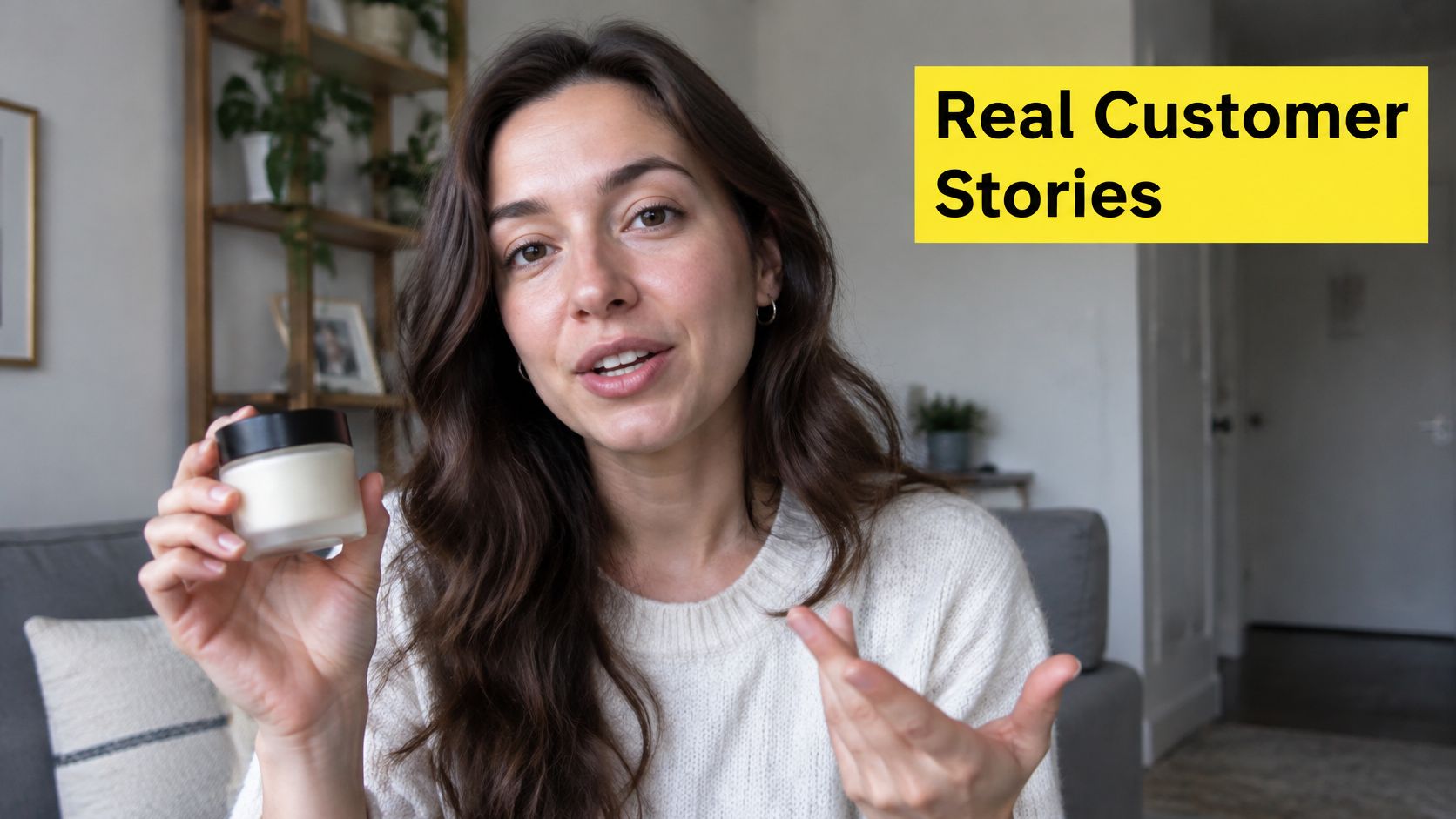
Best fit: e-commerce brands selling a physical product, where the goal is direct purchase volume. Also strong for local services: film the technician, stylist or esthetician doing the actual work, since the process itself is the proof. Weakest fit: high-ticket B2B, where the buyer evaluates a named expert's credibility and a stranger's enthusiasm carries no weight.
The test to run
Brief three to five creators on one angle. Give each a hook line, two talking points, the offer, and the disclosure requirement (#ad or the platform's paid partnership label). Then cut 10 to 20 hook variations from that footage: problem-first, price-first, demo-first, objection-first.
Run them against the same audience, budget and landing page.
Practical rule: judge UGC on cost per purchase or cost per booked appointment, not thumb-stop rate. A curiosity hook can win the first two seconds and lose the sale. Demo-first hooks usually pull fewer clicks but convert better, because viewers already know what is being sold before they tap.
Whichever hook wins becomes your new control. Every future test competes against it, not against the original, so each round of creative either beats your best or gets killed fast.
2. Founder-Led Talking Head Video
A founder on camera does something a stock video can't. Someone accountable for the promise is looking at the viewer, naming the problem, and putting their name behind the guarantee.
Dollar Shave Club's 2012 launch video, with co-founder Michael Dubin talking directly to camera, is still the reference point for the format. It also explains why the format travels: the person is the proof.
Nielsen's research backs the creative-quality thesis across decades. Project Apollo, a 2006 advertising effectiveness initiative, found creative accounted for 65% of a brand's advertising-driven sales lift, and Nielsen later reported that strong creative could account for as much as 80% of in-market success in traditional television and up to 89% in digital advertising (Nielsen). Weak creative shifts the burden onto media buying. Strong creative carries the campaign.
Where founder ads beat creator ads
Founder video wins on high-consideration purchases: coaching programs, tax planning, real estate services, anything where the buyer is assessing trust before price. Creator video usually wins on impulse purchases under roughly $100.
Script the first line, the offer, and the guarantee. Leave the middle loose so the delivery sounds like speech, not recitation.
A founder ad that opens with "I'll show you exactly what we do and what it costs" outperforms one that opens with a company history.
Run one founder version against one creator version, same offer, same audience, seven days minimum. You're not looking for the prettier ad. You're looking for the cheaper qualified lead.
3. Before-and-After Transformation Ad
Before-and-after is the most honest format on this list when the transformation is real, and the fastest way to get an account flagged when it isn't. It demonstrates a result instead of describing one.
Best fit: med spas and aesthetic clinics for treatments like skin resurfacing, remodelers and cleaners showing finished projects, fitness and dental. Weak fit: anything where the visible change takes months, because the ad promises a timeline the product can't keep.
Three things separate a converting before-and-after from a scroll-past:
Identical conditions: same camera angle, same lighting, same background, same crop. If the "after" is better lit, viewers assume the result is fake.
Stated timeframe: put the interval in the ad and on the landing page. "12 weeks" builds more trust than an unlabeled pair of photos.
One benefit line: pair the visual with the outcome the viewer wants, such as booked appointments or a faster turnaround, not a list of features.
The test to run
Build two versions of the same transformation: one leading with the visual, one leading with the offer and timeframe in the headline. Then test a carousel against a single image or short video. Watch cost per booked appointment and no-show rate, because a dramatic visual can pull clicks from people who were never going to buy.
Check platform ad policies and local advertising rules on outcome claims before you spend a dollar. Regulated categories, including aesthetics and health, treat these claims seriously.
4. Problem-Agitate-Solve (PAS) Hook Copy
PAS is the oldest structure in direct response and still the cheapest to test, because it's words, not production. Name the problem, sharpen the frustration for a sentence or two, then present the solution.
It works because it mirrors how people already describe their pain. Homeowners don't search for "reliable contractors." They search because the last one disappeared mid-job.
Pull the language from your own sources. Read the last 50 reviews, the support tickets, the call recordings. The phrases customers repeat are the hooks.
Google's own data shows how much the input quality matters on the search side. Improving a Responsive Search Ad's Ad Strength from "Poor" to "Excellent" is associated with an average 12% increase in clicks and conversions, and Armani Beauty recorded a 61% increase in click-through rate plus an 11% increase in on-site conversions after adding responsive search ads to unbranded campaigns (Google Ads Help).
The test to run
Write three PAS hooks, each opening on a different pain point, and one benefit-led hook as a control. Run them as RSA headline variants in the same ad group, with distinct value propositions rather than near-duplicates. Keep agitation to one or two sentences. Push past that and you're writing fear copy, which converts badly and attracts refunds.
Judge the winner on conversion rate and qualified-lead rate, not CTR. Ad Strength is an input diagnostic, not a profitability guarantee.
5. Social Proof Testimonial Montage
A montage strings four to six short customer clips or quotes into one ad. It answers the question a prospect is already asking at the consideration stage: has this worked for someone like me?
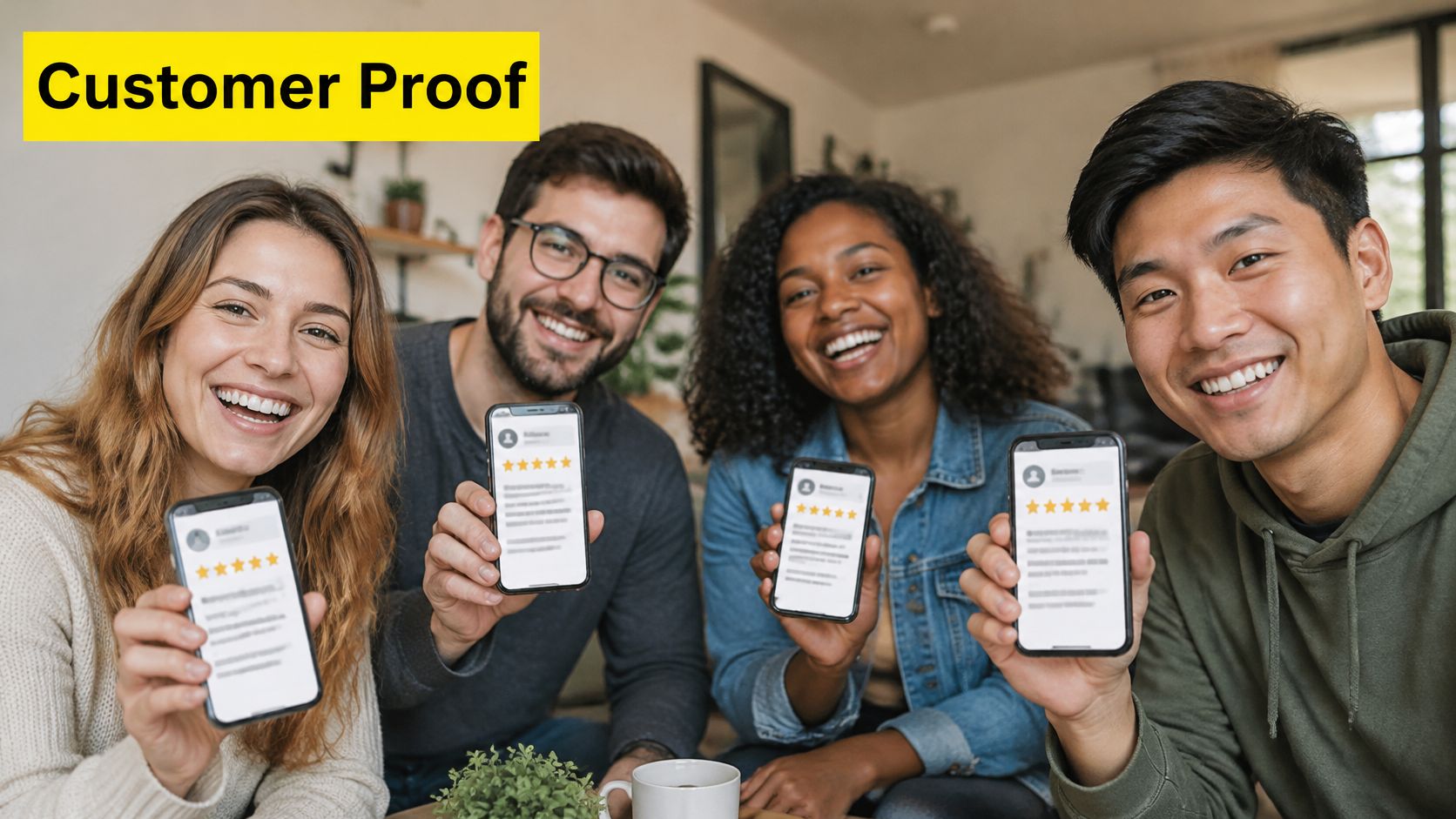
Best fit: coaching and course businesses with named student outcomes, e-commerce brands with a deep review base, local services with repeat customers. Weakest fit: new brands with three testimonials, where a montage looks thin and the same faces repeat across every ad.
Keep each clip under 10 seconds and lead with the strongest result, not the friendliest face. Show a name, a location, or a business type on screen. Specificity is what makes a testimonial read as evidence instead of decoration.
Collect on a cadence, not on instinct. Send a two-question request 14 days after purchase or project completion, ask for a phone-recorded clip, and keep written permission on file for every result you publish. Use real numbers only. A fabricated or rounded-up outcome is the fastest way to lose an audience that checks.
The test to run
Run the montage against one single, longer testimonial covering the same objection. Montages build volume of proof; a single story builds depth. Which wins depends on price point. Under $200, montage usually takes it. At higher price points, the single story with a named customer and a specific before-and-after number tends to outperform.
Measure cost per purchase and refund rate. Testimonials that oversell raise refunds even when they lower cost per acquisition.
6. Offer-Led Guarantee Ad
Most ads sell the product. This one sells the risk reversal, and for a lot of offers that's the actual buying decision.
Alex Hormozi's $100M Offers built a widely used framework around it, breaking offer value into the dream outcome, perceived likelihood of achievement, time delay, and effort required. The guarantee is where perceived likelihood gets fixed.
Best fit: services with a measurable promise (lead volume, booked calls, turnaround time), coaching with a defined outcome, and any offer where the buyer's real fear is "I'll pay and nothing happens." Weak fit: products with high return abuse risk or a promise you can't operationally honor at scale.
Building the stack
Lead with the guarantee in the headline or the first three seconds. If it's buried below the fold, it isn't doing any work.
Add one or two bonuses that remove a secondary obstacle, such as onboarding help or a template library, rather than random extras that inflate perceived value.
Match the landing page headline to the ad promise word for word. A guarantee ad that lands on a generic homepage wastes the click.
Set the conditions in plain language. Timeframe, eligibility, what the customer must do. Vague guarantees read as traps.
A guarantee you can't afford to honor isn't a guarantee. It's a liability with a marketing budget.
The test to run
Run the guarantee version against the same offer without the guarantee, same audience, same page structure. Then watch three numbers together: cost per lead, close rate, and refund or cancellation rate. A guarantee often raises volume and slightly raises refunds. It's still the right call when the net contribution margin goes up, and a mistake when it doesn't.
7. Free Resource Lead Magnet and Webinar Funnel Ad
Free still works, but only when the free thing is narrow. "Free guide" converts poorly. "The 7 deductions my clients miss on their first S-corp return" converts.
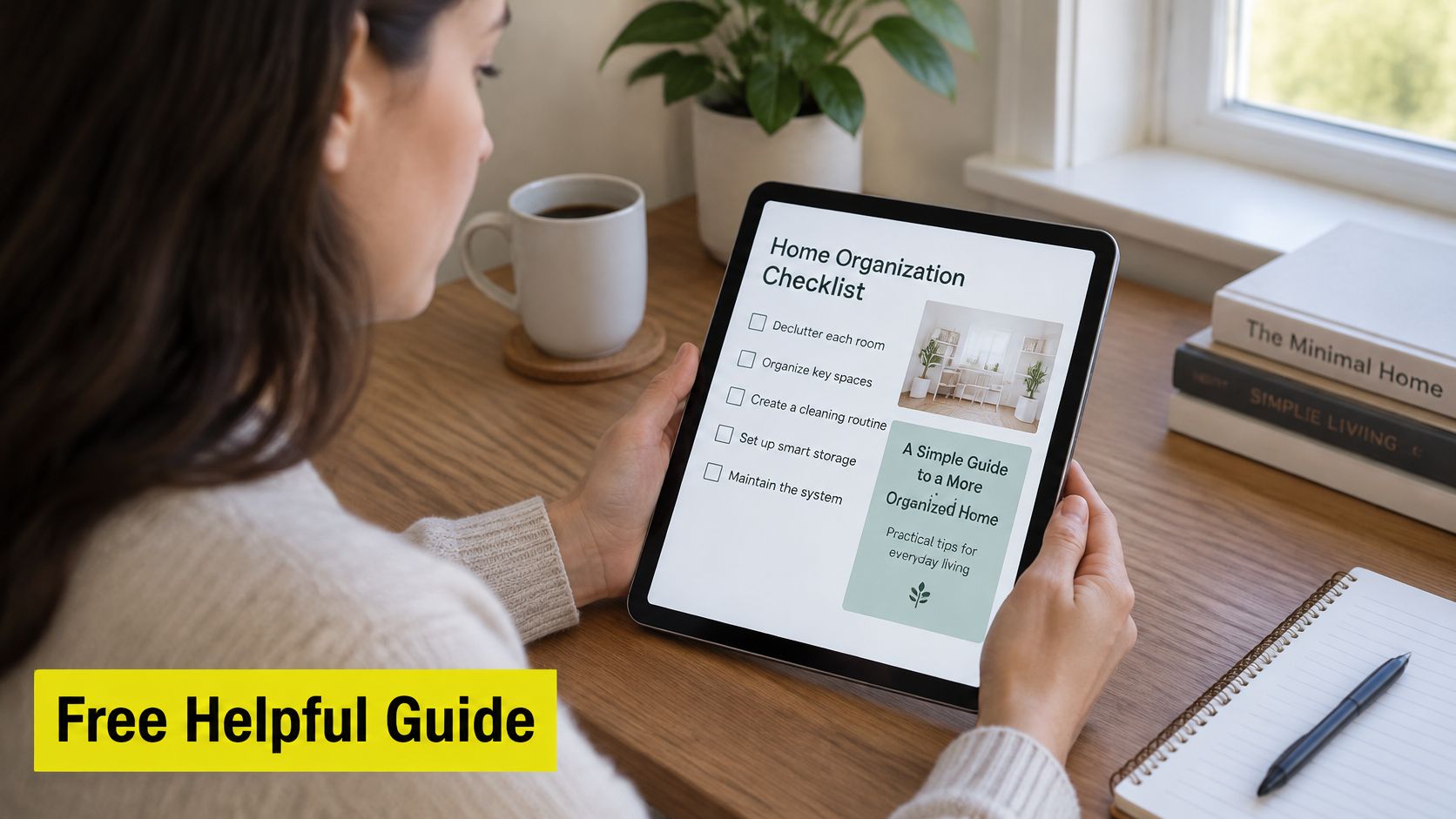
Best fit: tax planners and advisors running strategy sessions, coaches and course creators running live trainings, consultants with a diagnostic. The format buys attention with information and sells in the follow-up.
The promotion mix matters. In Digiday and Celtra's survey of 111 respondents, 84% of brands and agencies said they created social media ads, while 56% created video ads and 56% created search ads (Digiday). Run the same lead magnet on both surfaces, with a search ad catching the people who saw the social ad and went looking.
The test to run
Track the whole chain, not the first number. Cost per registration is a vanity metric if nobody shows up. Measure registration-to-show rate, show-to-call rate, and call-to-close rate.
Ask one qualifying question on the form, such as revenue band or entity type, and compare lead quality against a name-and-email-only version.
Send two reminders before the session and one replay after, then compare attendance and replay views by reminder sequence.
Test a live session against an evergreen replay for the same topic. Live usually converts better; evergreen scales without a calendar.
If you're building the funnel behind the ad, these funnel structures are worth reading before you spend on traffic.
8. Interactive Quiz or Calculator Ad
Interactive ads trade a small action for a personalized result. The viewer answers three to five questions or enters a number, and the tool returns something specific enough to be worth an email address.
Best fit: real estate valuation and mortgage affordability, tax savings estimates, skincare routines, home services quoting ranges. Zillow's home value estimator is the reference example: the tool itself generates the lead.
Engagement creates investment. Someone who has already answered four questions about their situation is far more likely to book a call than someone who clicked a static ad.
The test to run
Compare a three-question version against a six-question version on completion rate and lead quality. Longer quizzes qualify harder and convert fewer people. The right length depends on what a lead is worth to you, not on best practice.
Show a blurred or partial result before the gate, so the viewer can see the payoff.
Make the output specific. A precise dollar range for the viewer's own property beats a generic "Get your free report."
Route the result immediately. A booking calendar or a same-day follow-up sequence, not a weekly newsletter.
Retarget completers separately from people who started and dropped, with a different message for each.
Measure cost per completed quiz and cost per booked appointment side by side. A cheap completion that never books is a data collection exercise, not a campaign.
9. Humor and Meme-Style Ad
Humor buys attention on platforms where attention is the scarce resource, and it buys memory, which most ad formats don't.
Meta's Ad Recall Lift estimates incremental recall by comparing people who saw an ad against a control group that didn't, calibrated with thousands of daily polls and machine-learning projections (Meta Business Help Centre). That makes memorability a measurable objective, not a vibe.
Best fit: brands with a distinct voice and a low-consideration product, or any brand willing to be memorable rather than respectable. Duolingo's owl-led TikTok presence and Liquid Death's irreverent "Murder your thirst" campaign are the standard references. Weak fit: regulated categories, high-trust services, and any brand where a joke undercuts the promise.
Production speed matters more here than anywhere else. In 2025, 30% of digital video ads were built from scratch or enhanced using generative AI, according to the Interactive Advertising Bureau's digital video research, which is exactly the kind of volume you need to keep meme formats current.
The joke has to set up the offer, not replace it. A funny ad that nobody can remember the product from is an expensive short film.
The test to run
Run the humor version against a straight benefit ad with the same offer, audience and placement. Compare cost per purchase, and check branded search volume in the same window. Humor often wins on recall and loses on direct response in the first week, then closes the gap as branded demand builds.
Refresh trend references every two to three weeks. A stale meme dates the brand faster than no meme at all.
How the nine ad creative ideas compare on effort, fit, and risk
Item | Best For | Production Effort | Main Strength | Main Risk |
|---|---|---|---|---|
User-Generated Content (UGC) Style Video Ads | E-commerce, beauty services, coaches, and course creators | Low to moderate; ongoing creator content | Authenticity and fast creative testing | Creator quality, ad fatigue, and usage-rights compliance |
Founder-Led Talking Head Video | Coaches, consultants, real estate professionals, and financial advisors | Low; requires founder time and on-camera delivery | Builds credibility and personal connection | Performance depends heavily on the founder |
Before-and-After Transformation Ad | Med spas, salons, and home services | Moderate; requires consistent visuals and substantiated results | Shows tangible results quickly | Regulatory or platform issues from unsupported or exaggerated claims |
Problem-Agitate-Solve (PAS) Hook Copy | Local services, real estate professionals, and coaches | Low; requires audience research and copywriting | Focuses messaging on customers' pain points | Can feel formulaic or manipulative |
Social Proof Testimonial Montage | Coaches, e-commerce, and professional services | Moderate; requires customer footage or reviews | Builds trust and reduces perceived risk | Fabricated or cherry-picked claims can damage trust |
Offer-Led Guarantee Ad | Coaches, consultants, local services, and course creators | Moderate; requires a compelling, deliverable offer | Reduces hesitation with clear value and risk reversal | Unfulfilled promises, refunds, or low-intent leads |
Free Resource Lead Magnet and Webinar Funnel Ad | Tax advisors, coaches, consultants, course creators, and real estate investors | High; requires content and follow-up automation | Generates leads and nurtures prospects before a sale | Low-quality leads or weak webinar attendance |
Interactive Quiz or Calculator Ad | Real estate, mortgage, med spa, and tax businesses | High; requires tool development and testing | Engages and qualifies prospects with personalized results | Build complexity, drop-off, or misleading results |
Humor and Meme-Style Ad | E-commerce, younger consumer audiences, and personality-led local businesses | Moderate; requires creative concepts and frequent refreshes | Captures attention and builds brand memorability | Humor may not convert or may feel off-brand |
Pick One Format, Test It Hard, and Scale the Winner
Nine formats is too many to run at once. Choose two or three that fit your offer and campaign goal, build four to six variations of each, and run them against the same audience for at least a week before you judge anything.
The discipline most accounts lack is diagnosis. In a 2025 survey of 164 U.S. marketers, 71.3% said creative evaluation was becoming more important, but only 58.5% regularly connected creative quality to performance and just 51.2% had reliable metrics or dashboards for doing it (TripleLift and eMarketer). That gap is where money leaks.
Judge winners on cost per lead, cost per purchase, contribution margin or return on ad spend. Not likes. Not CTR. A curiosity hook can pull cheap clicks from people who will never buy, while a quieter testimonial ad brings in fewer clicks and better customers.
Hold everything constant except the element you're testing. Change the hook, keep the offer. Change the offer, keep the visual. Change the landing page headline, keep the ad. Two variables at once and you've learned nothing.
Give each concept enough volume to be judged. A creative that has produced 12 conversions hasn't produced a verdict. Let it run until the numbers stabilize, then kill or scale.
Refresh cadence matters too. Repair an ad when frequency climbs and cost per acquisition drifts up. Replace it when the hook itself has stopped working, which you'll see as a falling click-through rate and rising cost per thousand impressions at the same time.
If you want a second set of eyes on your creative plan, Wojo Media runs a free demo call where Jason Wojo or a growth manager builds a custom paid ads strategy around your offer. And if you're still learning how to structure a clean test, this guide to A/B testing in marketing covers the mechanics.
Wojo Media builds done-for-you ad creative packages, with scripted and edited video creatives plus professional images for ads and retargeting, so you can launch several of the formats above without waiting on a shoot. The team optimizes your offer and guarantee first, then builds the landing page and ad copy to match, tracking backend KPIs so spend moves toward whatever is actually profitable. Book a free demo call at Wojo Media and get a custom paid ads strategy built around your offer.
Comments