
10 Ecommerce Ads Examples That Drive Real Sales

Search and social aren't competing for a small slice of advertising budgets. Together, they generated $191.7 billion in U.S. internet advertising revenue in 2024, approximately 74.1% of the total, according to IAB's digital advertising revenue report. Yet buying access to those channels doesn't give shoppers a reason to choose your product.
That's where many ecommerce ads fall apart. A generic product shot, a vague benefit, and a shop button might describe what you're selling, but they don't resolve the buyer's actual question: Why should I buy this instead of the alternative?
Useful ecommerce ads examples answer that question through a repeatable formula: hook, offer, proof, and CTA. Dollar Shave Club makes the founder the messenger. Blendtec makes the demonstration the entertainment. Gymshark makes the product part of a recognizable training routine.
The campaign concepts below offer creative inspiration, not guaranteed performance benchmarks. The practical breakdowns show how to adapt each approach across Facebook, Instagram, TikTok, Google, and YouTube without copying another brand's personality.
Practical rule: Borrow the selling mechanism, not the costume. An entertaining ad still needs a credible reason to buy and a landing page that delivers on its promise.
1. Dollar Shave Club and the Founder-Led Pitch
Dollar Shave Club's “Our Blades Are Fing Great”* launch video puts a direct spokesperson in front of a straightforward offer. Michael Dubin's delivery makes the pitch memorable, but the useful mechanism is simpler: explain an everyday frustration, introduce a convenient alternative, and make the next step obvious.
For an ecommerce brand, this is a strong format to test when the founder can explain the product more convincingly than a conventional presenter. It doesn't require an elaborate origin story. It requires a clear answer to why the product exists.
The Creative Formula
Hook: Have the founder challenge a familiar buying frustration.
Offer: Explain the product, delivery model, and actual cost without making shoppers decode the proposition.
Proof: Show the product being handled or used while the founder explains what matters.
CTA: Send viewers directly to the advertised product or subscription.
Say you sell refillable cleaning products. Film the founder showing the clutter under a sink, demonstrating the refill process, and explaining what buyers receive. Use actual package contents and current terms rather than an unsupported savings claim.
For YouTube, build a complete pitch that still communicates the product before viewers can skip. For TikTok and Instagram Reels, create a vertical cut that starts with the frustration rather than a logo animation.
The trade-off is spokesperson dependence. A founder-led ad can become difficult to refresh if every variation needs the founder on set. Capture separate hooks, demonstrations, objections, and closing lines so editors can build new combinations without repeating the entire shoot.
2. Old Spice and the Recognizable Campaign Character
Old Spice's “The Man Your Man Could Smell Like” shows how a distinctive character can hold together an otherwise absurd campaign. Isaiah Mustafa's delivery gives viewers something recognizable while the scenes change around him.
That doesn't mean an ecommerce store needs surreal sets or celebrity talent. The adaptable idea is consistency across variations: the same spokesperson, point of view, or visual device can introduce different products without making every ad feel unrelated.
The creative formula: Use an unexpected address to the audience as the hook, make a product benefit the offer, demonstrate something tangible as proof, and end with a product-specific CTA.
Build a Character Buyers Can Recognize
Say a men's grooming store creates a relentlessly practical bathroom adviser. That character can demonstrate a body wash, explain a deodorant format, and answer questions about a travel kit. The joke changes, but the customer knows who's speaking and what kind of advice to expect.
Use comments to identify useful follow-up topics. If shoppers repeatedly ask whether a product travels well, film a response that shows the packaging rather than another disconnected comedy sketch.
On Instagram and TikTok, turn those responses into standalone ads with enough context for a cold viewer. On YouTube, give the character room to explain a bundle or buying decision.
A memorable character helps people recognize the advertiser. It doesn't prove they want the product.
Judge the approach against purchases, new-customer acquisition, and backend revenue. High comment volume can identify a creative direction worth testing, but it isn't a substitute for profitable demand.
3. Blendtec and the Product Demonstration as Entertainment
Blendtec's “Will It Blend?” turns a functional product question into a curiosity-driven demonstration. Viewers want to see what happens next, and the product remains central to the action.
The demonstration below illustrates that entertainment-first approach.
The transferable lesson isn't to destroy unusual objects. It's to find a visible test that makes a product capability understandable. Keep demonstrations safe and consistent with intended use.
Make the Test Relevant to the Purchase
Hook: Introduce an outcome the viewer wants to see resolved.
Offer: Connect that outcome to the product's practical value.
Proof: Show the test clearly enough that editing doesn't undermine credibility.
CTA: Link to the exact model demonstrated, with specifications and purchase options.
For a luggage brand, a useful version might demonstrate wheel movement across different surfaces or show how a packed case opens in a cramped room. A spectacle unrelated to travel may attract attention while leaving buyers unsure whether the suitcase fits their needs.
YouTube gives you room for setup, demonstration, and explanation. TikTok and Reels need a tighter edit, but don't remove the moment that proves the claim merely to make the video shorter.
The trade-off is audience quality. Some viewers will watch an interesting experiment without any intention of buying. Evaluate product-page engagement and downstream purchasing alongside viewing metrics, then test a practical demonstration against the spectacular version. You want curiosity that leads toward a buying decision, not just another completed view.
4. Fenty Beauty and Product-Specific Representation
Fenty Beauty's launch offers a useful creative lesson: representation can demonstrate product relevance, not merely decorate the campaign. For foundation, seeing the product on someone with a relevant complexion helps a shopper evaluate whether it belongs in their consideration set.
The practical adaptation is to show the product across the actual conditions buyers need to assess.
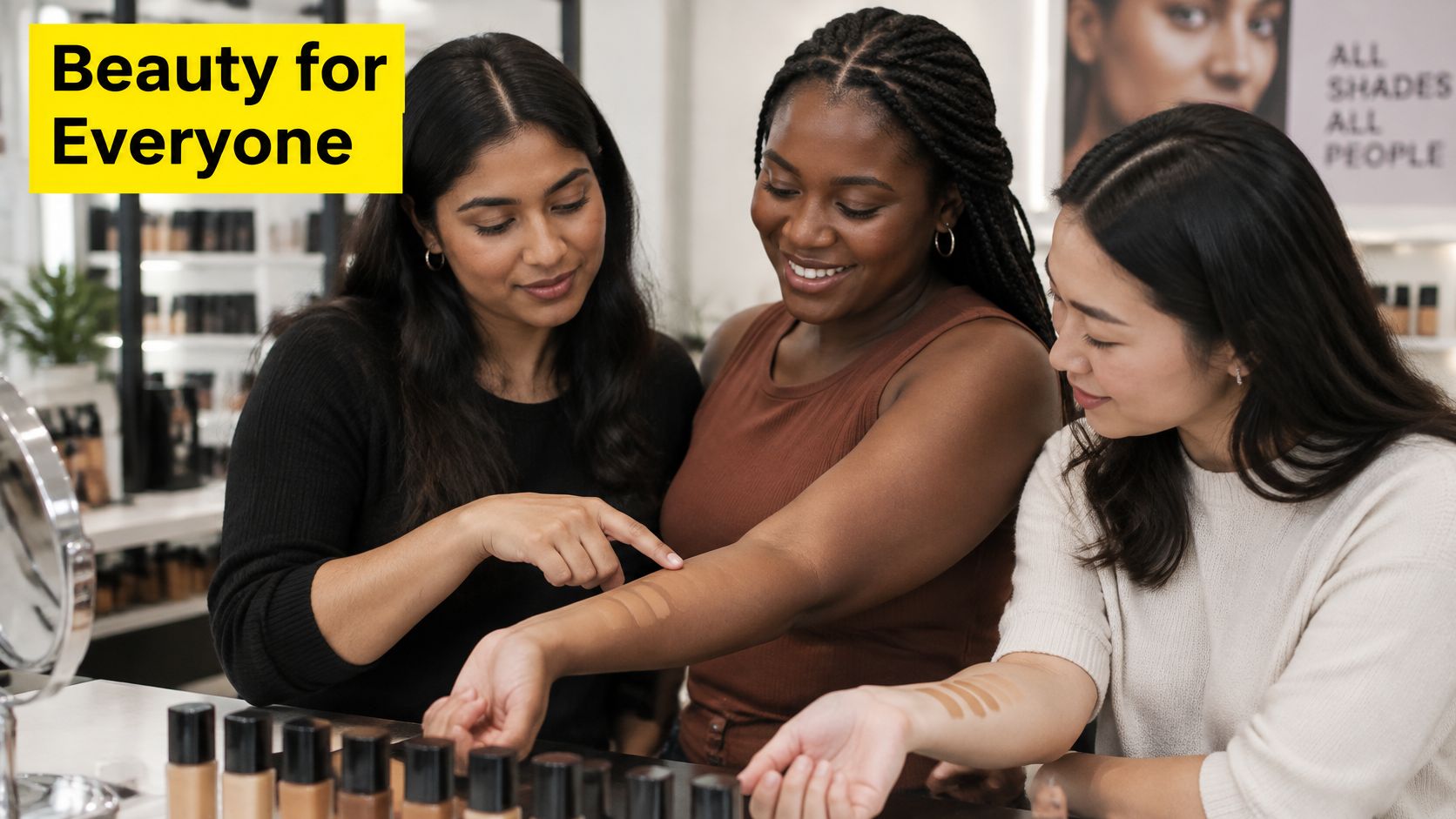
The creative formula: Make recognition the hook, relevant product choice the offer, an honest application demonstration the proof, and a shade-selection or product-shopping action the CTA.
Match the Ad to the Selection Experience
Say a cosmetics store promotes a foundation range. Instead of showing an assortment of bottles, create ads around distinct customer questions: undertone, finish, application, or coverage. Keep lighting and camera settings consistent when the comparison depends on appearance.
For Instagram, use a carousel to organize those differences without forcing every explanation into a single video. For TikTok, ask creators to show application and explain their selection process in plain language.
The landing page needs to continue that work. Send shoppers to a relevant shade selector or product page with clear swatches, availability, and returns information. A broad homepage forces them to restart the decision.
The trade-off is production complexity. More representative creative requires careful product matching, accurate captions, and suitable inventory. Don't advertise a specific fit or shade experience if the shopper can't find that option after clicking.
5. Gymshark and Creator Content With a Job to Do
A training clip can show an apparel buyer something a studio image can't: how clothing behaves during movement. Gymshark's creator-led approach provides a useful model for making the product part of a recognizable activity rather than treating it as an isolated object.
Choose the activity before choosing the creator. A strength-training audience may need different evidence from runners or customers buying everyday athleisure.
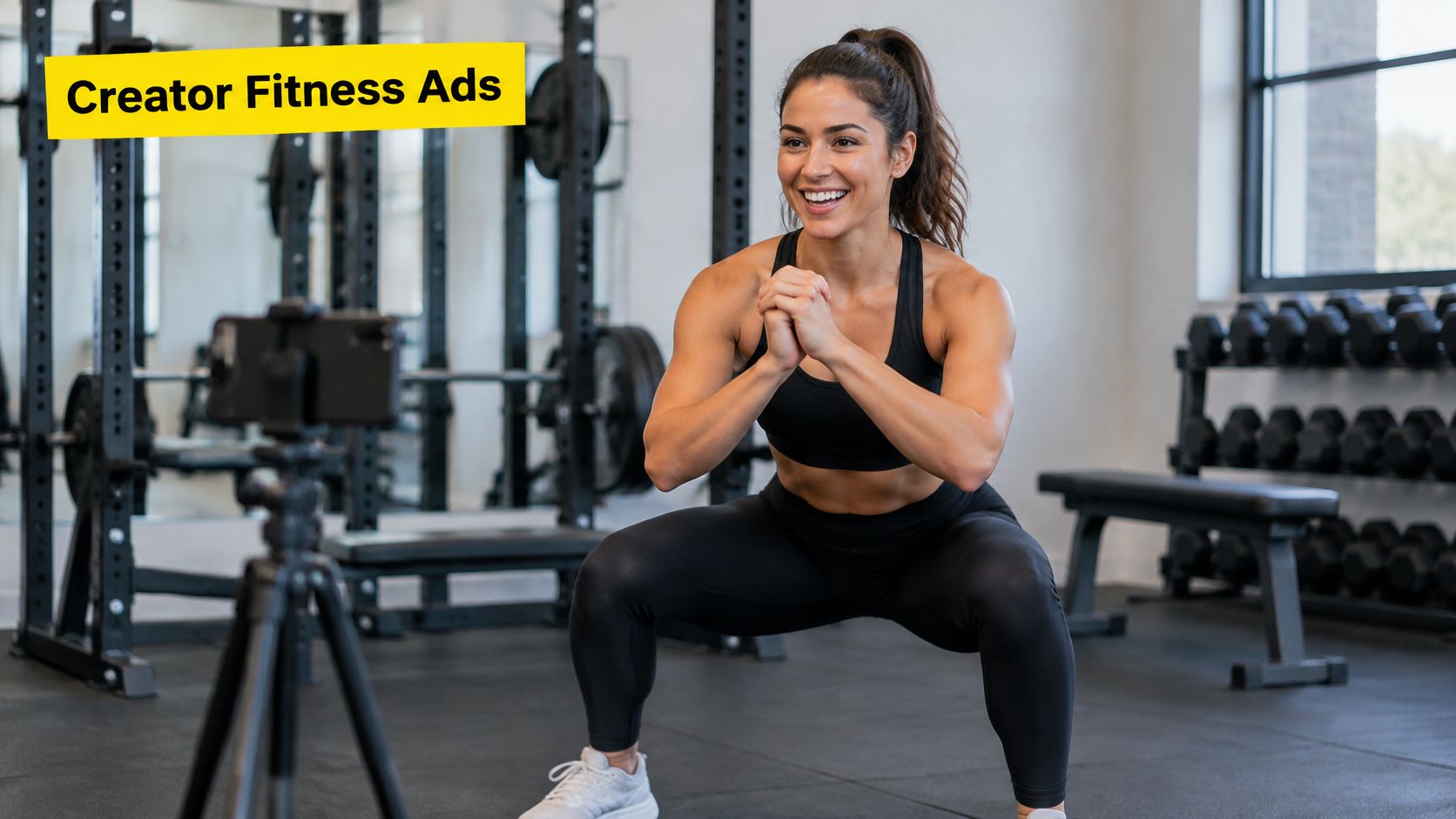
Brief the Buying Question, Not Just the Shot
Hook: Open on a recognizable training problem or movement.
Offer: Present the garment as an option for that specific use.
Proof: Show fit, movement, fabric behavior, and the creator's genuine observations.
CTA: Direct viewers to the featured garment or relevant collection.
Say you're selling training shorts. Ask a creator to demonstrate pocket access and waistband behavior during their normal workout. Avoid supplying praise they couldn't truthfully substantiate.
For Instagram partnership ads, agree on paid usage permissions, editing rights, duration, and account authorization before production. For YouTube, longer creator content can explain sizing and construction, with separate edits for shorter placements.
Track creator links and codes, but don't treat them as complete attribution. Customers may watch a creator, search for the brand later, and purchase without using the code.
The trade-off is control versus credibility. A tightly scripted studio-style delivery may remove the very quality you hired the creator to provide. Define mandatory product facts and prohibited claims, then leave room for natural explanation.
6. Glossier and Customer Content That Resolves Doubt
Glossier's customer-centered creative is a useful reference for brands that need relatable product evidence. The strongest adaptation isn't just filming on a phone. It's showing a real use case and answering a prospective customer's objection.
For skincare, that might mean texture, application order, packaging, or how the product fits into a routine. Don't turn a subjective customer experience into a universal outcome.
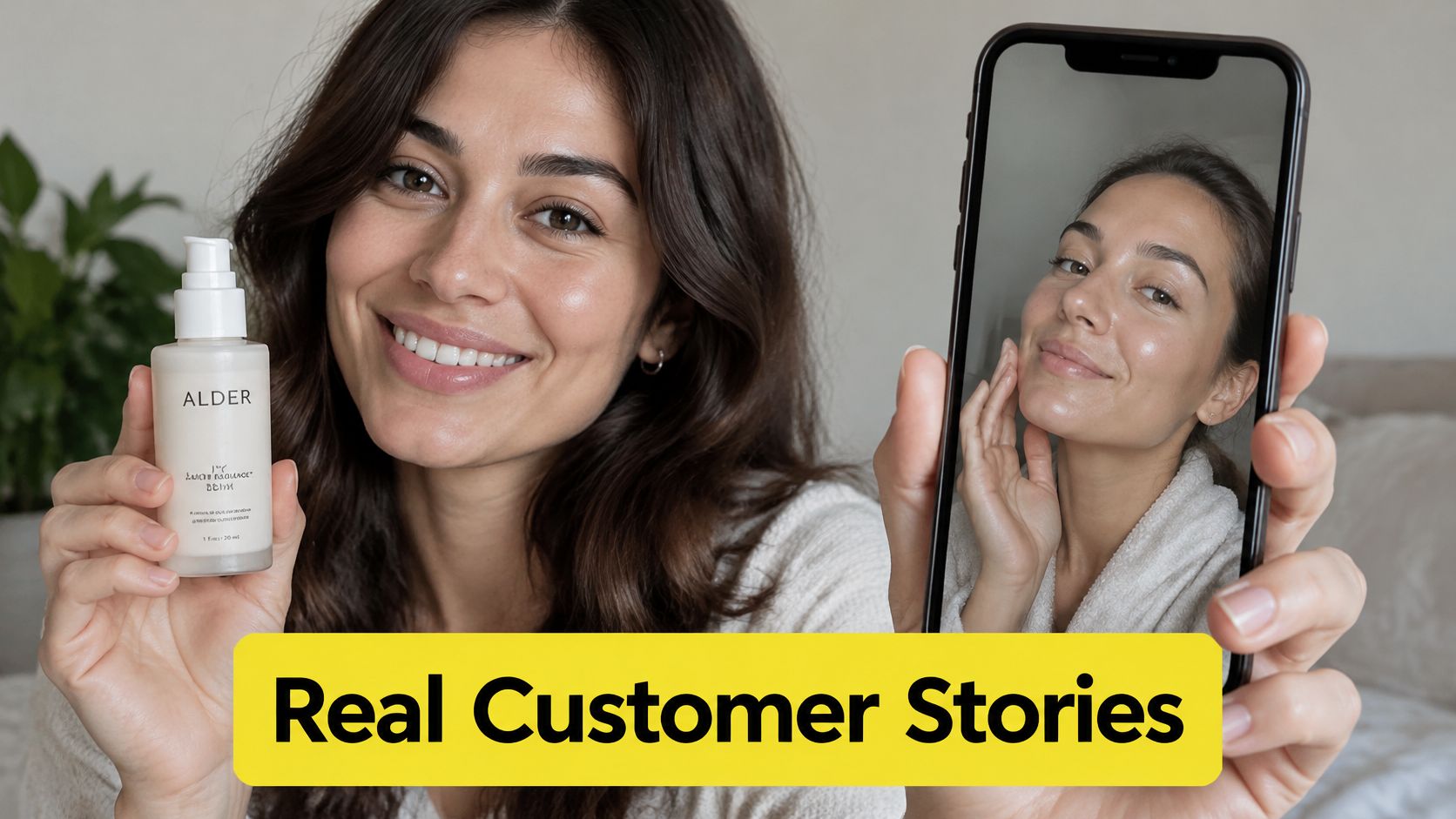
The creative formula: Begin with a recognizable concern as the hook, present the relevant product benefit as the offer, show genuine use as proof, and give a direct product-page CTA.
Separate Genuine Customers From Commissioned Creators
Understanding how UGC creators work helps you commission usable content without confusing paid production with unsolicited customer feedback. Get permission for paid advertising and preserve the meaning of any testimonial you edit.
Say a moisturizer store receives questions about whether the texture feels heavy. Build an Instagram Reels test around application footage and the customer's description of their own experience. Compare it with a studio demonstration using the same offer and landing page.
Trust also extends beyond the creative: 58% of shoppers say a confidence-related factor influences whether they buy on social media, according to DHL's 2025 ecommerce research.
Match that reassurance with clear delivery information, payment options, and returns terms. A believable video can't compensate for an unclear checkout.
7. Liquid Death and a Distinctive Brand Voice
Liquid Death's “Murder Your Thirst” positioning demonstrates how far a brand can move from conventional category language. The useful lesson for another store is not to copy the heavy-metal aesthetic. It's to make deliberate choices about voice, imagery, and the kind of customer the brand wants to attract.
Distinctiveness creates a trade-off. A strong personality can make some shoppers interested and others uncomfortable. Decide whether that separation suits your product before borrowing an abrasive tone.
Give the Joke a Commercial Destination
The creative formula starts with an unexpected visual or statement as the hook. Follow it with a clear product or bundle offer, recognizable packaging and real product information as proof, and an uncomplicated purchase CTA.
Say a sparkling-water brand builds its personality around disappointing office refreshments. A short sketch could contrast a dull meeting with a colorful variety pack, then show exactly what the pack contains. The concept needs its own voice rather than a diluted imitation of Liquid Death.
For TikTok, test the sketch as a native vertical video. For Instagram Stories, use a simpler edit that makes the product and destination clear without relying on the entire setup.
Creative guardrail: If viewers remember the joke but can't identify what you're selling, test an earlier product reveal.
Use engagement to choose themes for further testing, not to declare a sales winner. Follow awareness creative with product explanations and relevant offers, then assess whether those shoppers become customers at an acceptable acquisition cost.
8. Meta Advantage+ Shopping Campaigns and Creative Diversity
Meta's automated shopping approach is a campaign structure, not a creative concept. It helps determine delivery, but the advertiser still needs to supply persuasive assets, reliable purchase signals, and an offer worth considering.
Start by understanding Advantage+ Sales campaign naming so you're comparing the right campaign setup rather than relying on an outdated label. Then separate the automation decision from the creative decision.
Supply Different Reasons to Buy
Hook: Test different openings, such as a problem, demonstration, or customer objection.
Offer: Keep the advertised product and commercial terms consistent within a clean comparison.
Proof: Supply demonstrations, credible testimonials, and relevant product details.
CTA: Match the destination to the advertised item or collection.
Say you sell women's outerwear. Give the campaign a weather-focused demonstration, a fit explanation, and a creator styling video. Changing background colors on an otherwise identical image doesn't test different buying motivations.
Measurement deserves attention before scaling. In a platform-reported Ipekyol case, implementing Conversions API alongside advertising optimization coincided with a 45.80% decrease in cost per purchase result and a 92.78% increase in ROAS, according to Meta's Ipekyol case study.
That isn't a guaranteed lift or proof that automation alone caused the improvement. Validate browser and server-event deduplication, purchase values, currencies, and event identifiers.
For Facebook and Instagram, evaluate automation against a defined comparison. Don't automatically add overlapping retargeting campaigns without checking whether they duplicate reach and complicate interpretation.
9. Google Shopping and Performance Max for Purchase Intent
A shopper searching for a particular product has a different starting point from someone watching entertainment. Google Shopping creative needs to help that person compare the item, price, merchant, and suitability without unnecessary friction.
The product feed is therefore part of the ad creative. A persuasive image can't fix a misleading title or an unavailable variant.
Translate the Formula Into Product Data
For Shopping, the hook is a relevant image and title. The offer is the actual product and price, the proof is accurate product information supported by the destination, and the CTA is the purchase path.
Say you sell running shoes. Write titles that distinguish brand, model, intended use, and relevant variant attributes. Use clean product images, then verify that the landing page matches the advertised selection.
Use Google product categories explained to review feed classification, while keeping category selection separate from customer-facing title optimization.
A historical COURTS test adding Smart Shopping to its Search setup produced 7.8× online sales revenue and an 84% reduction in cost per online sales transaction, according to Google's COURTS experiment.
Those results concern Smart Shopping, not a current Performance Max benchmark. The practical lesson is to evaluate product-led automation alongside Search rather than assuming one structure replaces everything else.
For Performance Max, supply useful creative assets and review brand controls, product performance, and search reporting where available. A strong blended result can conceal weak products or demand you would've captured through branded Search anyway.
10. Dynamic Product Ads for Relevant Retargeting
A shopper who inspected a particular dining chair doesn't necessarily need another introduction to your furniture brand. They may need dimensions, fabric information, delivery reassurance, or a reminder of the item they considered.
Dynamic product ads use catalog information to keep that reminder relevant. Their limitation is equally important: relevance doesn't prove incremental impact.
Match the Message to the Unfinished Decision
Hook: Show the product or category the shopper considered.
Offer: Present current availability and a relevant reason to return.
Proof: Add useful product details, credible reviews, or clear delivery terms.
CTA: Return the shopper to the correct product and variant.
Say a furniture store retargets product viewers with a room-setting image and dimensions. Cart abandoners receive a delivery-focused message, while recent purchasers are excluded unless the store has a relevant complementary product.
For Meta catalog ads, verify that event content identifiers match catalog items. Remove unavailable products, review destination URLs, and monitor repetition through reporting and the controls available in your campaign type.
Don't begin with a discount by default. You may reduce margin on an order the customer was already preparing to place.
Measurement remains a real constraint: 62% of retail-media buyers identify a lack of measurement standards as a top challenge, according to the Forbes report on retail-media measurement.
High reported retargeting ROAS can mean you're reaching likely buyers, not necessarily creating additional purchases.
Where volume permits, compare an eligible holdout with an advertised group. Set duration, sample requirements, and decision thresholds before launch, then assess additional sales and contribution margin rather than attributed revenue alone.
10 Ecommerce Ads Examples at a Glance
Example | Platform Focus | Creative Format | Core Tactic | Best For |
|---|---|---|---|---|
Dollar Shave Club: “Our Blades Are F***ing Great” (2012) | YouTube | Founder-led, direct-to-camera video | Use humor and a clear subscription offer | Low-cost, direct-response launches |
Old Spice: “The Man Your Man Could Smell Like” (2010) | TV, YouTube, and social media | Surreal humor and personalized video responses | Build a memorable persona and engage audiences in real time | Brand refreshes and broad awareness |
Blendtec: “Will It Blend?” | YouTube and social platforms | Repeatable product demonstration videos | Turn product proof into entertaining content | Visually demonstrable products |
Fenty Beauty Launch Campaign (2017) | Social media and influencer channels | Creator-led launch content | Lead with inclusive product differentiation | Beauty launches and diverse audiences |
Gymshark Influencer Ad Campaigns | Instagram and YouTube | Creator and athlete workout content | Use authentic creators and community content | Fitness brands and niche audiences |
Glossier: User-Generated Content in Paid Social | Instagram and social media | Customer photos and videos | Use customer content as social proof | Beauty brands building community and trust |
Liquid Death: “Murder Your Thirst” Social Campaigns | TikTok and Instagram | Edgy short-form video | Make a commodity product distinctive through bold branding | Social-first awareness and younger audiences |
Meta Advantage+ Shopping Campaigns | Facebook and Instagram | Catalog ads and dynamic creative | Automate audience and placement optimization | E-commerce conversion campaigns at scale |
Google Shopping and Performance Max Campaigns | Google Search, Shopping, YouTube, Display, Discover, and Gmail | Product-feed ads and asset groups | Automate bidding and reach across Google channels | Capturing high-intent product searches |
Dynamic Product Ads for Retargeting | Facebook, Instagram, and Google Display Network | Personalized catalog ads | Show shoppers products they viewed or added to cart | Retargeting visitors and recovering abandoned carts |
Turning These Formulas Into Your Own Winning Campaigns
The most useful ecommerce ads examples reduce to practical decisions, not a particular production style. What stops the right buyer? What are you offering? Why should they believe you? What should they do next? Answer those questions before choosing between a founder video, creator demonstration, catalog ad, or automated campaign.
Build around a sharp offer, a conversion-focused landing page, coordinated cross-platform advertising, and disciplined backend KPI tracking. None of those parts can reliably compensate for a failure elsewhere. More impressions won't fix unclear delivery terms, and a better landing page won't make an irrelevant audience want the product.
Test the Selling Argument Before Expanding Production
Choose a product with dependable availability and enough margin to support acquisition. Write distinct creative angles around its real buying motivations, then connect each angle to supporting evidence on the product page.
Keep the offer and destination stable while comparing creative where practical. If you change the product, discount, audience, and landing page together, you'll struggle to identify what improved the result. Give tests enough time to reflect the buying cycle rather than reacting to every daily fluctuation.
Evaluate new-customer acquisition cost, contribution after advertising, returns, and repeat purchasing alongside platform ROAS. Set a blended marketing efficiency ratio, total revenue divided by total advertising spend, as an account-level check rather than a replacement for campaign diagnosis.
Wojo Media's framework uses those same four parts: offer, landing pages, omnipresent ads, and backend KPIs. A watch brand client went from 0.49 ROAS to a profitable 1.75 ROAS with Wojo Media, a client-specific outcome rather than a universal profitability threshold.
The objective isn't to reproduce somebody else's dashboard. It's to find a selling argument your customers believe, deliver the experience your ad promises, and expand spending only while the economics remain workable. Keep the creative recognizable across platforms, but adapt the execution to how people use each channel.
We build paid advertising strategies across Facebook, TikTok, and Google, with offer, landing-page, and creative work aligned to the purchase decision. Visit Wojo Media to book a free demo call with Jason or a growth manager and discuss which of these ecommerce ad formulas fits your store, margins, and acquisition goals.
Comments