
8 Real Estate Lead Follow Up Scripts: Phone, Text, Email

A buyer fills out a property form on a Tuesday night, then keeps browsing while their phone sits beside them. If your reply arrives the next morning, another agent may already have answered the question and booked a conversation. The challenge isn't just reaching the lead quickly. It's knowing what to say next, how to qualify their intent without making the exchange feel like an interrogation, and when to keep following up if they aren't ready.
These real estate lead follow up scripts are organized by intent and funnel stage, not just by channel. Each one gives you language to use, a practical example, and an objection-handling variation, along with the next touch to make. Start with a new inquiry, then adapt the sequence for buyers who need time, past clients, expired listings, open house visitors, and paid-ad leads.
Speed matters, but a fast, pushy message can undermine trust. Zillow's consumer research, as covered by StreetEasy, found that 47% of recent buyers hired the first agent they contacted, while 53% preferred text or messaging apps over phone calls. A helpful first touch confirms the request, identifies you, and gives the prospect an easy next step. StreetEasy's report on what buyers look for in an agent offers context for balancing a prompt response with communication that feels personal.
1. Speed-to-Lead Initial Call Script
Use this call for a fresh inquiry, while the property or offer is still clear in the prospect's mind. Keep the opening direct and brief:
“Hi [Name], this is [Your Name] with [Brokerage]. You just asked about [property or offer]. I'm calling to answer your question and see what would be useful next. Are you looking to [view the property, compare homes, or discuss a sale]?”
Pause after the question. Don't rush into your credentials or deliver a full listing pitch. Your job on this first call is to confirm why the prospect reached out and agree on one next step, such as sending details or scheduling a showing.
The timing matters. In a study of 2,241 U.S. companies handling web-generated leads, only 37% responded within an hour. In a separate analysis of sales leads, organizations that attempted contact within an hour were nearly seven times more likely to qualify a lead than those that waited an additional hour, according to the Harvard Business Review study summarized by HousingWire. Set your CRM to alert the assigned agent as soon as an inquiry arrives, and aim to call within five minutes when staffing allows.
If they say, “I'm just looking”: “That makes sense. Would it help if I sent a few options that fit what you viewed, so you can compare without committing to a showing?”
If they don't answer, leave a short voicemail that names the property or request and says how to reach you. Follow with a brief text only when you have permission to text. For agents handling seller prospects, the same direct, question-first approach can be adapted using these scripts for seller outreach calls.
2. Lead Qualification Script
Qualification is where most agent conversations either open a relationship or stall it. You are not filling in a form. You are routing the lead onto a track: ready to tour, months out, or watching. That decision sets the cadence for every touch that follows.
Ask four questions in this order, conversationally, and let the answers do the routing:
“What's prompting the move?” “When would you ideally like to be settled?” “What price range feels comfortable?” “Have you spoken with a lender or started a pre-approval?”
Motivation first, because it explains the timeline. A relocation with a start date is a different lead from someone testing whether they can afford a bigger yard. Timing second, because it separates a showing request from a nurture candidate. Budget third, once the prospect is talking. Financing last, since it is the question most likely to feel like a credit check.
Three tracks cover most outcomes. Ready now, a move inside 60 to 90 days with a budget in mind, earns an appointment and a lender introduction the same week. In motion, six months or so out, gets a saved search and a check-in tied to new inventory. Browsing, with no timeline, gets light contact and no pressure. Investors need a different opening: target rent, rehab tolerance, cash available. Intent should change your next question, not your tone.
If they resist discussing budget: “No problem. We can start with the neighborhoods and home features that matter most, then narrow the price range when you're ready.”
If they haven't spoken to a lender: “Most buyers haven't at this stage. Would it help if I sent two lenders who are good with [relocation / self-employed income / first-time buyers] and let you pick?”
The lender question is not a gate. Offer it as a service and the prospect gets something useful either way.
Buyers rarely talk to a dozen agents before they commit. They talk to two or three and choose the one who made the process feel manageable, which is why a clean qualification call beats a fast pitch.
Log motivation, timeline, budget band, financing status and the agreed next step in consistent fields. When plans shift, move the lead to a different track instead of letting one early answer lock them into the wrong sequence.
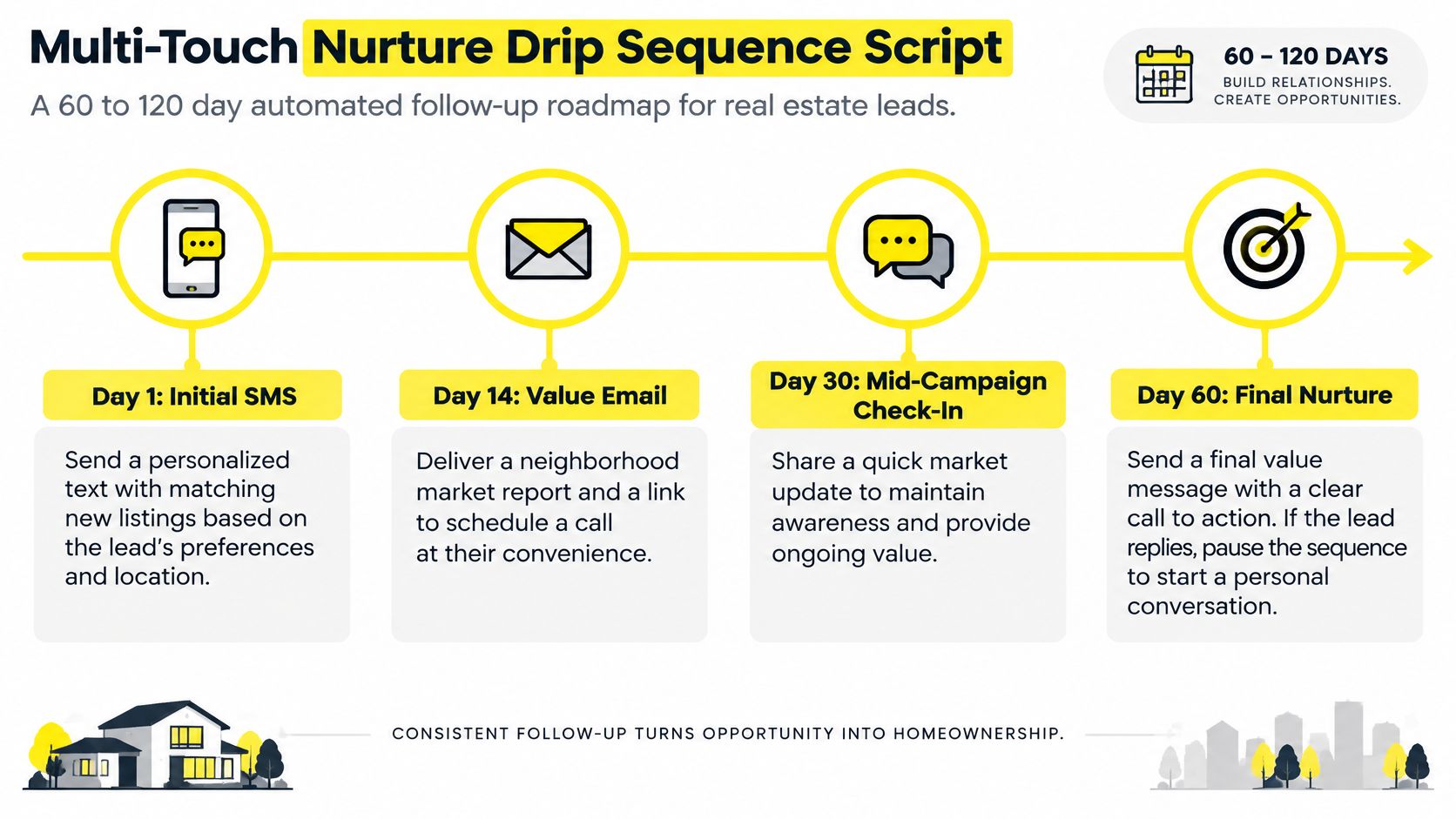
3. Multi-Touch Nurture Drip Sequence Script
Nurture works when the cadence matches intent. A lead whose lease ends soon needs a tighter rhythm than a browser comparing neighborhoods. Automation helps you reclaim time with follow-up systems, but the sequence should stop the moment a lead replies.
Day 1 text:
“Hi [Name], thanks for asking about homes in [Area]. Would you like me to send new listings that match what you're looking for?”
This gives one clear reply path and ties back to the lead's original request. If they narrow the preference, update the CRM and skip the voicemail.
Day 3 call or voicemail:
“Hi [Name], it's [Agent] following up on your [Area] search. I can narrow the options by [their stated preference]. Call or text me if that would help.”
This adds a specific reason to respond. If timing is the objection, offer a monthly update or a pause.
Day 5 email:
“Subject: A quick guide to [Area]Hi [Name], I put together a short overview of [neighborhood feature or relevant market topic]. Is there a particular part of [Area] you're comparing?”
Changing the channel makes the touch feel less like a chase. If the lead asks a question, stop the drip and answer as a person.
Dormant leads need a longer runway. A documented real-estate reactivation example used a 7 to 12-touch sequence over 30 to 60 days, and the RealScout lead nurture guide reports an increase in appointments and lead-to-listing conversion in that example. Low-intent leads get fewer, more valuable touches; near-term leads get tighter follow-up and a direct next step.
If they say, “I'm not ready”: “Understood. Would a monthly update be useful, or would you rather I pause messages until you reach out?”
4. Past Client and Sphere Check-In Script
A past-client message should sound like a genuine check-in, not a referral request disguised as one. Open with a detail that connects to the relationship, then ask whether there's something useful you can do:
Give the person room to talk about the home or their plans before asking for an introduction. If the conversation is warm, make the referral request specific:
“Do you know anyone who's thinking about buying or selling soon? I'd be glad to answer their questions, even if they're just getting started.”
A closing anniversary is a natural time to reconnect, but you can also use a homeowner question, a neighborhood update, or a practical resource as the reason for contact. Add a reminder to your CRM, note the last conversation, and vary personal check-ins with relevant market information. A broad message copied to every past client is easier to send, but it can make a personal relationship feel like a mailing list.
Worked example: You call a past client to ask how a recent renovation turned out. They mention that a coworker is considering a move. Ask whether they'd be comfortable making an introduction, then follow the coworker's preferred method of contact rather than assuming they want a call.
If they say, “I don't know anyone right now”: “Of course. I'm glad we caught up. If a question comes up for you or someone you know, I'm here.”
A good check-in leaves the relationship stronger whether or not it produces an immediate lead. Keep the referral question optional, and record the client's preferences so your next message feels considered.

5. Expired Listing Follow-Up Script
An expired listing call needs a different tone from a buyer inquiry. The homeowner has already spent time preparing and marketing the property, so lead with a question about their experience rather than a promise that you can sell it.
“Hi [Name], this is [Agent] with [Brokerage]. I noticed the listing for [address] is no longer active. I'm sorry the sale didn't come together. If you're open to it, I'd like to hear what you think got in the way and share how I'd review the next steps. Would a brief conversation this week work?”
Before calling, verify the listing status and review the property details. Don't assume the owner still wants to sell, and don't make claims about what caused the listing to expire without asking. If they agree to meet, prepare a focused comparative market analysis and be ready to discuss pricing, presentation, access, buyer feedback, and marketing.
The stronger conversation is usually diagnostic. Ask what the owner liked and disliked about the previous process, what feedback they received, and whether their priorities have changed. Then explain how you'd investigate the issue and what you'd recommend, rather than reciting a list of credentials.
If they say, “We're taking a break”: “That's understandable. Would it be helpful if I sent a short review of the recent activity around your home, with no pressure to relist?”
If there's no answer, leave a concise voicemail and follow with a short letter that refers to the property and offers a specific, useful review. Avoid repeated contact after a clear request to stop. A thoughtful, low-pressure approach gives the owner room to decide whether the next step is a meeting, a future call, or no further contact.
6. Open House Visitor Follow-Up Script
A visitor may have liked the home, the neighborhood, or the chance to browse. Refer to something they discussed, then offer a helpful follow-up:
“Hi [Name], thanks for stopping by the open house on [Street]. You mentioned the kitchen and yard were important. Would you like me to send a few similar homes, or are you mainly looking for information about this property?”
Send the message through the channel the visitor agreed to use, and check that their contact details are accurate before leaving the open house. Tag the contact by property and note any preferences they shared. That gives your next call or email a real point of reference instead of a generic greeting.
A practical sequence starts with a thank-you message, followed by a call after the visitor has had time to consider the property. If the home isn't right, offer comparable listings that fit their stated needs. If the visitor is a potential seller who attended to assess your marketing, ask whether they'd like to discuss their own property and what they noticed about the presentation.
In a responsiveness audit of real estate brokerages, 48% of buyer inquiries submitted to brokers received no response, according to a WAV Group responsiveness study described in the Conversion Research Benchmark Report. Don't treat an open-house sign-in as permission to send an endless stream of messages. Make a useful, relevant follow-up, then respect the visitor's preferences.
If they say, “We're already working with an agent”: “Thanks for letting me know. I won't step into that relationship. If you have a question about the open house itself, I'm happy to help.”
7. Break-Up Re-Engagement Script
After several thoughtful attempts, a short close-the-loop message is better than another vague check-in. Make it clear you'll stop active outreach unless the lead wants to continue:
“Hi [Name], I've reached out about your search in [Area] but haven't heard back, so I'll pause my follow-ups for now. Would you like me to close the file, or keep sending occasional updates?”
Use this only after you've documented your earlier calls, texts, or emails and made each touch useful. One real-estate nurture example used 7–12 touches over 30–60 days to reactivate dormant leads, but the right cadence depends on the original inquiry, your prior contact, and the person's preferences. Avoid treating a specific number of attempts as a universal rule.
The break-up message should feel like a boundary, not a pressure tactic. Don't imply that the lead owes you a reply, and don't send a “final” note if they've already opted out. If your CRM supports it, change their status so the usual workflow stops and any later contact follows the preference they gave you.
If they say, “I've already bought”: “Congratulations, and thanks for letting me know. I'll update my notes and stop the search follow-ups. If you need anything related to the home later, you can reach me.”
If they don't respond, stop personal outreach and move the record out of the active queue. The useful result may be a reply, but it may also be a clean end to a sequence that no longer fits.
8. Paid Ad Lead Follow-Up Script for Social and Search Leads
A paid lead needs a message that matches the offer they saw. Someone who requested a home valuation shouldn't receive the same opening as someone who asked about a specific property. Reference the ad, confirm the request, and offer the next step:
“Hi [Name], this is [Agent] with [Brokerage]. You requested a home value estimate for [address]. I can put together a more useful review if I know a little about the home. Are you looking for a general estimate, or considering a sale?”
For a property inquiry, change the opening to name the property and ask whether they want availability details or a showing. Connect each ad form to your CRM so the lead is assigned promptly and the right message follows the right offer. Build separate tracks for valuations, buyer guides, open house promotions, and listing inquiries. Otherwise, an automated message can contradict the promise that generated the lead.
For example, a homeowner might submit a valuation form after seeing an ad, but have no immediate plan to sell. Offer an initial estimate or explain what information would make it more useful, then ask whether a future check-in would help. Track whether the lead replies, qualifies, or books a conversation, rather than judging the campaign only by the number of form submissions.
If they say, “I only wanted the free report”: “Absolutely. I'll send the report and won't assume you're ready to sell. Would you prefer I leave it there, or check back later?”
Zillow's 2025 consumer research found that text messaging and phone calls were nearly tied overall, at 34% and 33%, while first-time buyers were more likely than repeat buyers to prefer text, 42% versus 27%. Those preferences support asking how a lead wants to communicate instead of forcing every ad response into a phone-first sequence. Keep the first reply personal, and pause automated follow-up when the prospect answers.
How the eight follow-up scripts compare
Item | Best Channel | Lead Intent | Ideal Timing | Primary Goal |
|---|---|---|---|---|
Speed-to-Lead Initial Call Script | Phone call | High, newly expressed interest | Within 5–15 minutes of inquiry | Confirm interest and book a showing or consultation |
Lead Qualification Script (Motivation, Timeline, Price, Pre-Approval) | Phone or consultation | Assess readiness and fit | During an initial conversation | Qualify the lead and agree on a next step |
Multi-Touch Nurture Drip Sequence Script | Text and email | Early-stage or not yet ready | Over weeks or months | Stay engaged and identify when the lead is ready |
Past Client and Sphere Check-In Script | Personal call, note, or video | Relationship and referral potential | On milestones or seasonal occasions | Build loyalty and generate referrals |
Expired Listing Follow-Up Script | Phone call and letter | High seller intent | After confirming the listing has expired | Secure a pricing or marketing appointment |
Open House Visitor Follow-Up Script | Text, then call and email | Varies from casual interest to active buyer | Within 24 hours of the open house | Continue the conversation and identify serious prospects |
Break-Up Re-Engagement Script | Text or email | Unresponsive or inactive | After several unanswered attempts | Invite a reply or close active follow-up |
Paid Ad Lead Follow-Up Script for Social and Search Leads | Automated text, personal call, and email | Varies by ad and offer | Immediate acknowledgment, then same-day follow-up | Convert paid leads and measure lead quality |
Build Your Follow-Up System Before the Next Lead Arrives
Start with a reliable assignment and alert process for new inquiries. Pair the initial call with the qualification script, then route leads who aren't ready into a nurture sequence. Past clients, expired listings, open house visitors, and paid-ad leads need their own context and message, so don't force every contact into one generic campaign.
Make the next action visible in your CRM. Record the lead source, what they asked about, their timeline, preferred channel, and the promised follow-up. If the lead replies, pause the automation and let a person handle the conversation. A script should help you respond consistently, not keep sending messages after the prospect has already answered.
Track useful outcomes separately: how quickly an agent responds, whether the lead replies, whether the conversation qualifies, and whether an appointment is booked. A high number of attempts doesn't automatically mean the sequence is working. Review the messages regularly and ask whether each one fits the original ad, inquiry, or conversation. If a message gets ignored or creates confusion, rewrite it rather than adding another touch.
For teams managing multiple lead sources, assign each contact to a clear owner and make the next task explicit. You can also choose tools for your listing workflow that help your team keep property information and follow-up tasks organized. A consistent process is more useful than a complicated sequence nobody follows.
If your business uses paid campaigns, align the ad promise, landing page, CRM fields, and first follow-up message. Wojo Media's free demo call is a practical first step for discussing a custom paid advertising strategy and how it connects to lead handling. The aim is to build a system where each new inquiry receives a relevant response, and your team can see what happens after the form is submitted.
Wojo Media helps businesses connect paid advertising with conversion-focused offers, landing pages, ad copy, and backend KPI tracking. If you want to match your real estate campaigns to a more relevant follow-up system, book a free demo call by visiting Wojo Media.
Comments